For millions of Americans, the arrival of the 2026 Social Security benefit statement brought a mix of relief and frustration. While a 2.8% Cost-of-Living Adjustment (COLA) officially took effect in January, many retirees are finding that their actual “take-home” pay hasn’t kept pace with the rising costs of groceries, utilities, and housing. If you feel your check is looking smaller than it should, you are not alone. Understanding the mechanics of why your benefit might be lower and knowing the specific steps to rectify it can make a significant difference in your financial security this year.
The Hidden Culprits Behind a Smaller Check
The most common reason for a lower-than-expected check in 2026 is the surge in Medicare Part B premiums. While the Social Security Administration (SSA) increased benefits by 2.8%, the Centers for Medicare & Medicaid Services raised standard Part B premiums to $202.90 per month. Because these premiums are deducted directly from your Social Security check, they can eat up a substantial portion of your annual raise. Additionally, if your income has recently increased, you might be subject to the Income-Related Monthly Adjustment Amount (IRMAA), which adds extra surcharges to your Medicare costs, further shrinking your monthly deposit.
Strategizing a Benefit Boost Through Work
If you are still working or considering a return to the workforce, you have a direct lever to increase your future benefits. The SSA calculates your payment based on your 35 highest-earning years. If you have “zero” years in your record or years where you earned very little (such as part-time college jobs), working even a few more years at 2026 wage levels can replace those low-earning periods. By pushing your income toward the new 2026 taxable maximum of $184,500, you ensure that the maximum possible amount is being credited toward your future retirement calculations.
Correcting Earnings Record Inaccuracies
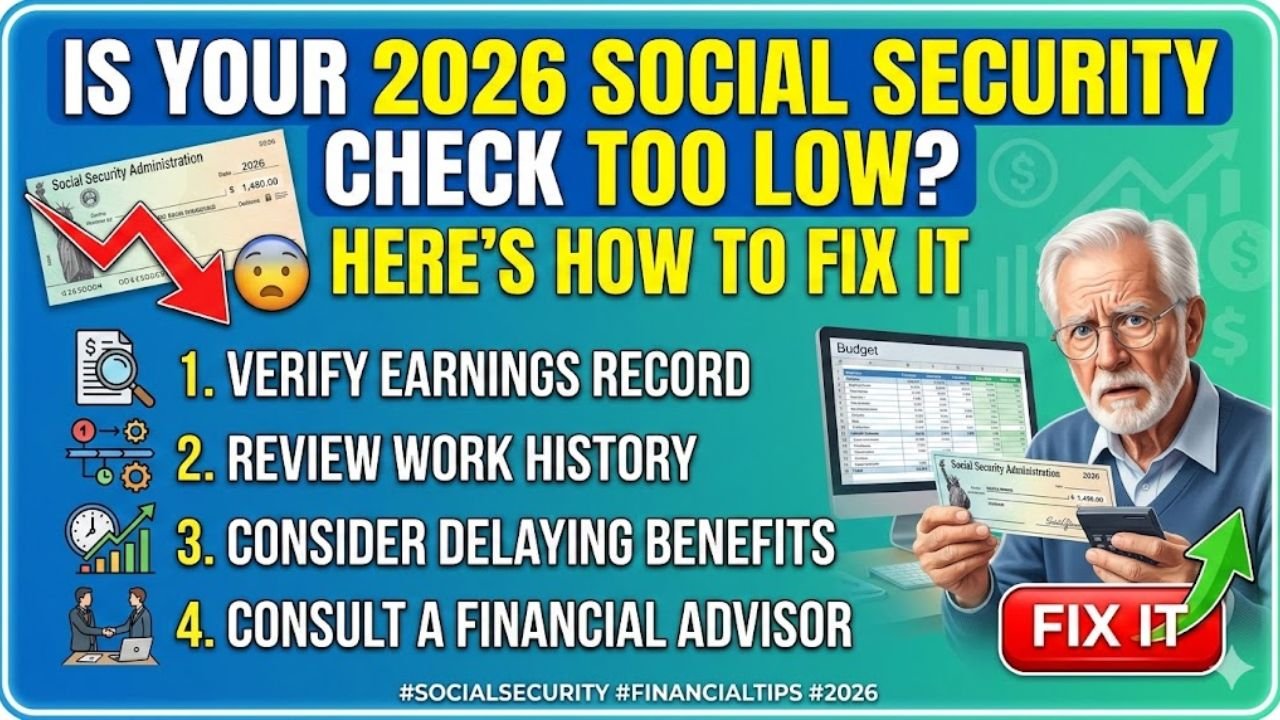
Sometimes, the reason a check is too low has nothing to do with the economy and everything to do with clerical errors. Your benefit is only as accurate as the earnings history the SSA has on file. It is vital to log into your “my Social Security” account and verify that every year of work is recorded correctly. If an employer failed to report your wages or used an incorrect Social Security number, your benefit will be permanently suppressed. Fixing these errors requires submitting W-2 forms or tax returns to the SSA, but the result is a permanent, retroactive increase in your monthly payments.
Minimizing the Tax Bite on Your Benefits
Many retirees are surprised to find that up to 85% of their Social Security benefits can be subject to federal income tax. In 2026, the “combined income” thresholds remain at $25,000 for individuals and $32,000 for joint filers. If you are hovering just above these limits, small adjustments to your traditional IRA withdrawals or shifting toward Roth accounts can lower your provisional income. By keeping your total income below these legacy thresholds, you effectively “fix” your check by keeping more of it out of the hands of the IRS.
Leveraging Spousal and Survivor Options
You might be leaving money on the table by claiming the wrong type of benefit. If you are married, divorced (after a 10-year marriage), or widowed, you may be eligible for a spousal or survivor benefit that is higher than your own earned benefit. In 2026, a spouse can receive up to 50% of the primary earner’s full retirement age amount. If your spouse was a high earner, switching to a spousal benefit—or delaying your own to let it grow while collecting a survivor benefit—can result in a much larger monthly check.
The Power of the Delayed Retirement Credit
For those who have not yet reached age 70, the single most effective way to “fix” a low check is simply to wait. For every year you delay claiming past your Full Retirement Age (which is now 67 for those born in 1960 or later), your benefit increases by 8% annually. This is a guaranteed, inflation-protected return that no market investment can reliably match. If you have already started benefits but reached Full Retirement Age within the last 12 months, you may even be able to “suspend” your payments to start accruing these credits, effectively giving yourself a significant raise later.
Final Steps for Financial Clarity
Rectifying a low Social Security check requires a proactive approach. Start by auditing your Medicare deductions and verifying your 35-year work history through the official SSA portal. If your benefit still feels insufficient, consult with a financial advisor to see if tax-efficient withdrawal strategies or spousal benefit switches can bridge the gap. While the 2.8% COLA provides a baseline, the real “fix” often comes from the adjustments you make to your own filing strategy and income management.
FAQs
Q1. Why did my 2026 check increase by less than 2.8%?
Most often, this is due to the increase in Medicare Part B premiums, which rose to $202.90. This deduction is taken before the money reaches your bank account, often offsetting the COLA gain.
Q2. Can I still increase my benefit if I am already retired?
Yes. You can increase it by correcting errors in your past earnings record or by returning to work, as the SSA automatically recalculates your benefit if your new earnings are among your top 35 years.
Q3. What is the maximum I can earn in 2026 without losing benefits?
If you are under Full Retirement Age all year, the limit is $24,480. For every $2 earned above this, $1 is withheld from your benefits. This limit disappears once you reach Full Retirement Age.