The buzz surrounding a $2,000 direct deposit arriving in February 2026 has captured the attention of millions of households across the nation. As the cost of living continues to fluctuate, any news regarding federal or state financial assistance tends to spread rapidly. However, it is vital to distinguish between official government programs and the various headlines circulating on social media. For the month of February 2026, these payments are primarily linked to the annual tax filing season rather than a newly enacted universal stimulus package.
While many individuals are indeed seeing significant sums hit their bank accounts this month, the source of this “windfall” is typically the Internal Revenue Service (IRS) processing 2025 tax returns. Because the IRS began accepting and processing returns in late January, those who filed early—especially those claiming specific family and low-income credits—are now receiving their refunds. For many American families, these refunds easily exceed the $2,000 mark due to the combination of withheld wages and refundable tax credits.
The Role of Tax Credits in Large Deposits
The primary reason a person might see a $2,000 direct deposit this month is the eligibility for major federal tax credits. The Child Tax Credit (CTC) and the Earned Income Tax Credit (EITC) are the most common drivers of these substantial payments. Under current regulations, these credits are designed to provide a financial cushion for working-class families. If you have dependents or fall within specific income brackets, the IRS calculates these credits as part of your refund, often resulting in a single direct deposit that matches or exceeds the rumored $2,000 figure.
In addition to these credits, the timing of these deposits is no coincidence. By law, the IRS cannot issue refunds involving the EITC or the Additional Child Tax Credit (ACTC) before mid-February. This “Path Act” requirement ensures that the agency has sufficient time to verify claims and prevent fraud. Consequently, the third and fourth weeks of February usually see a massive wave of direct deposits being released to early filers who opted for electronic transfers.
Direct Deposit Schedule and Expectations
For those wondering when their specific payment will arrive, the IRS typically follows a predictable processing window. Most taxpayers who file their returns electronically and choose direct deposit receive their funds within 21 days of the filing date. This is the fastest way to receive money, as paper checks can take six weeks or longer to arrive by mail. If you haven’t received your deposit yet, the “Where’s My Refund?” tool on the official IRS website remains the most accurate way to track your status.
Addressing the Stimulus Rumors
It is important to clarify that, as of February 2026, there has been no new federal legislation passed that authorizes a “universal stimulus check” for every citizen. While there have been ongoing political discussions regarding “Tariff Dividends” or “Rebate Checks” proposed by various administrations, these plans often require Congressional approval before they can become reality. Most of the $2,000 figures mentioned in current headlines are either referring to the average tax refund amount or localized state-level surplus rebates rather than a new federal relief program.
Scams often proliferate during this time of year, using the lure of a “new stimulus” to trick people into providing their bank account details or Social Security numbers. The IRS will never contact you via text message or social media to “sign up” for a $2,000 payment. If you are eligible for a refund or a government credit, it will be processed through the tax return you file or through existing social service channels.
How to Ensure You Receive Your Payment
To make sure your $2,000 (or more) arrives without a hitch, accuracy is paramount. Errors in reporting income or mistyping a bank routing number are the leading causes of refund delays. If a direct deposit is rejected by your financial institution, the IRS will eventually issue a paper check, but this can add several weeks to your wait time. Additionally, ensuring that you have all your 1099 and W-2 forms before filing will prevent the need for future amendments.
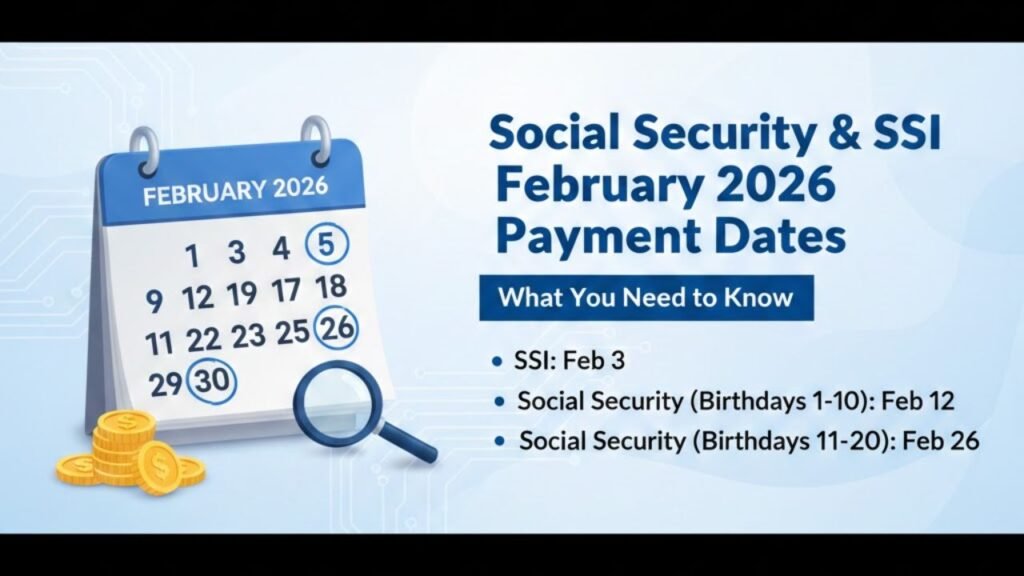
If you are a recipient of Social Security or Supplemental Security Income (SSI), your regular monthly payments will continue on their usual schedule. Sometimes, people confuse the cost-of-living adjustment (COLA) increases with separate stimulus payments. While your monthly benefit may have increased recently, it is distinct from the tax-related direct deposits currently hitting bank accounts this February.
Summary of the February 2026 Financial Outlook
In conclusion, February 2026 is indeed a month where many Americans will see a $2,000 direct deposit, but it is fundamentally tied to the 2025 tax filing cycle. By utilizing the credits available to families and low-income workers, the federal government distributes billions of dollars during this window. Staying informed and filing your taxes early remains the most effective strategy for securing these funds quickly and safely.
FAQs
Q1. Is the $2,000 payment a new government stimulus check?
No, there is currently no new universal stimulus program. The $2,000 deposits seen in February are typically federal tax refunds driven by the Child Tax Credit or the Earned Income Tax Credit.
Q2. How can I track my $2,000 direct deposit?
The best way to track your payment is through the official IRS “Where’s My Refund?” tool or the IRS2Go mobile app. You will need your Social Security number, filing status, and exact refund amount.
Q3. Why is my deposit taking longer than 21 days?
Delays often occur if a return requires additional review, contains errors, or includes claims for the EITC or ACTC, which are subject to mandatory hold periods until mid-February.