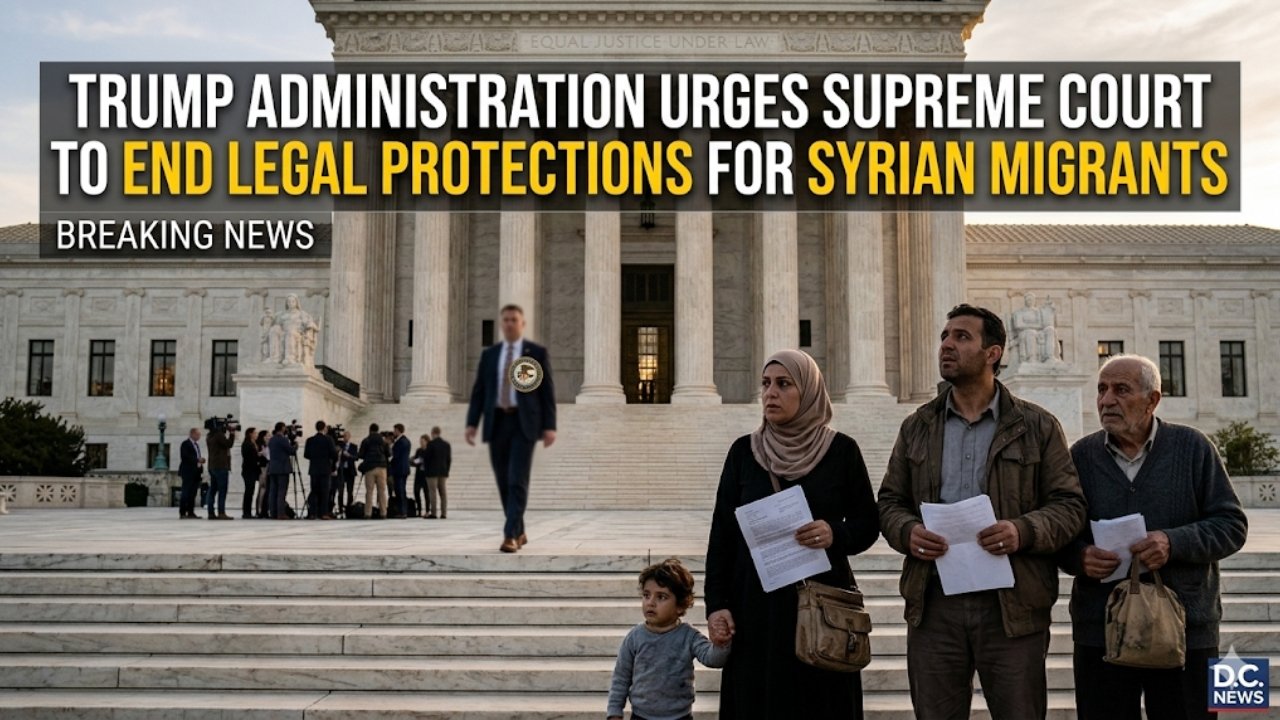
The Trump administration has made a bold move by asking the U.S. Supreme Court to lift legal protections for Syrian migrants under the Temporary Protected Status program. This request, filed on February 26, 2026, targets a New York federal judge’s ruling that blocked the Department of Homeland Security from ending these safeguards while lawsuits continue. With President Donald Trump pushing hard on immigration enforcement since his January 2025 inauguration, this appeal underscores a wider crackdown affecting thousands.
Background on Temporary Protected Status
Temporary Protected Status, or TPS, lets people from countries hit by war, disasters, or crises stay and work legally in the U.S. for set periods. Syria got TPS in 2012 amid its civil war, now shielding about 6,100 Syrians from deportation. These folks contribute to communities, holding jobs in construction, healthcare, and services, but the administration argues conditions have shifted enough to revoke it.
The Legal Battle Unfolds
A New York judge paused the DHS decision last November, citing risks to migrants facing return to instability. The Justice Department fired back, claiming courts overstep by meddling in executive powers on immigration. They point to recent Supreme Court nods allowing similar moves against Venezuelan protections, urging a stay to let enforcement proceed swiftly. Responses from challengers are due by March 4, keeping the nation watching closely.
Why Now? Administration’s Push
This isn’t isolated—DHS has targeted TPS for Venezuelans, Haitians, and others, impacting over a million lives. Officials say many no longer face the original threats justifying protection, freeing resources for border security. Critics see it as part of mass deportation plans, clashing with business needs for reliable labor. The filing warns lower courts ignore Supreme Court signals, seeking a broad ruling to streamline future cases.
Impact on Syrian Communities
| Aspect | Current TPS Holders | Potential Outcomes Post-Revocation |
|---|---|---|
| Number Affected | ~6,100 Syrians | Deportation risk for all, including 800 with pending renewals |
| Work Authorization | Legal employment in U.S. | Loss of jobs, economic hardship for families |
| Family Ties | Many with U.S. citizen kids | Family separations, community disruptions |
| Return Conditions | Syria’s ongoing conflict | Heightened dangers from violence, instability |
| Economic Role | Fill labor shortages | Strain on employers in key sectors like services |
Syrian migrants face tough choices if protections end. Families split, with some holding U.S.-born children, could see breadwinners deported. Groups like the International Refugee Assistance Project highlight dangers back home, where war lingers despite shifts.
Broader Immigration Crackdown
Trump’s team frames this as restoring rule of law, echoing campaign pledges for stricter borders. Past rulings blocked Haitian TPS for 350,000, showing judicial pushback. Supporters cheer efficiency; opponents fear humanitarian fallout, arguing TPS saves lives without permanent residency paths. This Supreme Court plea could set precedents reshaping protections for millions more.
Reactions from Advocates and Lawmakers
Immigrant rights groups decry the move as heartless, rallying for stays. Democrats blast it as chaotic policy ignoring court guidance, while Republicans back executive authority. Businesses quietly worry over workforce gaps. As filings stack up, the conservative Supreme Court majority holds sway, potentially tipping scales toward enforcement.
What’s Next in the Courts
The Court might act fast on the emergency stay, given past immigration wins. A full review could clarify TPS limits, guiding lower judges. Until then, uncertainty looms for Syrians building lives here. This saga highlights tensions between security goals and human stories in America’s immigration debate.
FAQs
What is TPS for Syrians?
TPS shields about 6,100 from deportation due to Syria’s war since 2012.
Why end it now?
The administration says threats lessened, prioritizing enforcement resources.
Could this affect others?
Yes, a broad ruling might speed TPS cuts for Venezuelans and Haitians too.