The rumors surrounding a $2,000 government direct deposit for March 2026 have sparked significant interest across the country. As the tax season peaks and inflation remains a key concern for many households, understanding what is actually happening with federal payments is essential. While there has been much discussion regarding “tariff dividends” or “rebate checks,” it is vital to separate political proposals from current IRS and Social Security reality.
The Reality of the $2,000 Direct Deposit Rumors
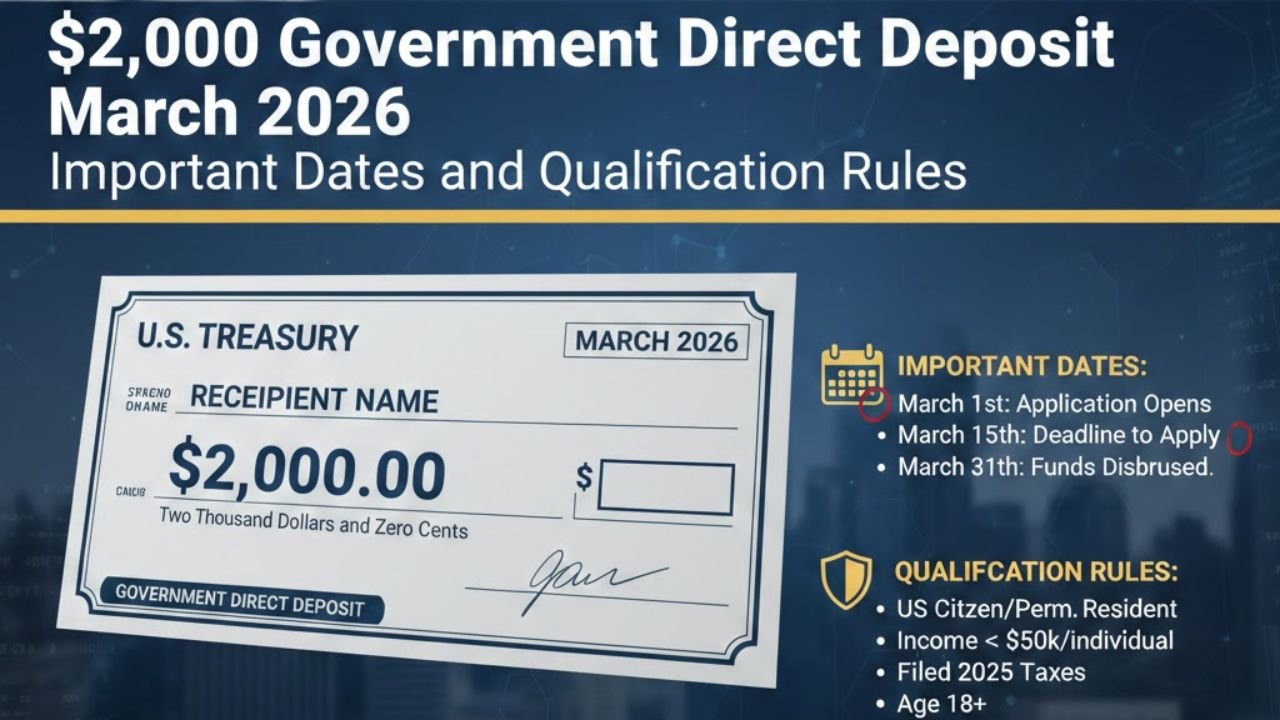
Currently, there is no approved legislation that mandates a universal $2,000 stimulus check or direct deposit for all Americans in March 2026. The figure often cited in headlines stems from a proposal for a “Tariff Dividend,” which would theoretically distribute revenue from import taxes back to the public. However, as of late February 2026, this remains a proposal and has not been signed into law or authorized by Congress.
For a payment of this magnitude to reach your bank account, several things must happen first. The U.S. Treasury and the Internal Revenue Service (IRS) would need a specific mandate from the legislative branch. Without a passed bill, any website or email claiming you “must act now” to claim a $2,000 payout is likely a phishing scam designed to steal your personal information.
Important Dates for Federal Payments in March 2026
While the $2,000 “stimulus” remains speculative, there are several confirmed federal payments and deadlines that will occur in March 2026. For millions of Americans, March is the primary month for receiving tax refunds, especially for those who claimed specific credits.
| Payment Type | Expected Date | Recipient Group |
| SSI Payments | March 1, 2026 | Supplemental Security Income recipients |
| EITC/ACTC Refunds | By March 2, 2026 | Early filers with Child/Earned Income credits |
| Social Security (Group 1) | March 11, 2026 | Birth dates between 1st – 10th |
| Social Security (Group 2) | March 18, 2026 | Birth dates between 11th – 20th |
| Social Security (Group 3) | March 25, 2026 | Birth dates between 21st – 31st |
The IRS has noted that taxpayers who filed their returns electronically in late January or early February should see their refunds hit their accounts via direct deposit during the first two weeks of March.
Qualification Rules for 2026 Federal Benefits
Since the $2,000 payment is not yet a formal program, qualification rules remain undefined. However, based on previous economic impact payments and current proposals, eligibility usually depends on your Adjusted Gross Income (AGI) from your most recent tax filing.
Historically, these payments are “means-tested,” meaning they are directed toward low-to-middle-income individuals. High earners—typically those making over $100,000 as individuals or $200,000 as married couples—are often phased out of such benefits. For the current 2025 tax year (being filed in 2026), the best way to ensure you are eligible for any future government funds is to file an accurate tax return. This ensures the IRS has your updated banking information and current income status on file.
Social Security and COLA Adjustments in March
It is also important to remember that Social Security benefits saw a 2.8% Cost-of-Living Adjustment (COLA) that took effect at the beginning of 2026. While this is not a one-time $2,000 check, it represents a permanent monthly increase for retirees and disability beneficiaries.
In March 2026, many seniors will be receiving their third payment of the year at this new rate. For the average retired worker, this adjustment added approximately $56 to their monthly check. When combined with a standard tax refund, some households may indeed see a total “direct deposit” amount exceeding $2,000 in March, though it is comprised of multiple sources rather than a single stimulus event.
How to Track Your Upcoming Payments
The most reliable way to monitor money coming from the government is through official portals. For tax refunds, the “Where’s My Refund?” tool on the IRS website is the gold standard. It provides a personalized date for when your funds will be sent to your bank.
For those receiving Social Security or SSI, the “my Social Security” account portal allows you to view your payment schedule and verify that your direct deposit information is correct. With the government’s shift toward 100% electronic payments under recent executive orders, having a functional bank account linked to these agencies is more important than ever to avoid delays.
Avoiding Scams and Misinformation
As we navigate the March 2026 window, scammers are increasingly active. They often use the promise of a “government windfall” to trick people into clicking malicious links. Remember: the government will never ask you to pay a fee to “unlock” a refund or dividend.
If you receive a text message or email about a $2,000 payment that requires your Social Security number or a “processing fee,” delete it immediately. Official communications regarding federal money will typically come through the U.S. Mail or appear directly in your verified IRS or SSA online account.
Final Summary of March 2026 Expectations
In summary, while the idea of a $2,000 direct deposit is a popular topic of discussion, it has not yet been implemented as a nationwide program. Residents should instead focus on their 2025 tax refunds and their regular Social Security disbursements, which are the primary sources of federal liquidity this month. Staying informed through official channels like IRS.gov and SSA.gov is the best way to manage your financial expectations for the spring.
FAQs
Q1. Is the $2,000 Tariff Dividend check real?
As of March 2026, it is a proposal that has been discussed by the administration, but it has not been officially approved by Congress or scheduled for distribution.
Q2. When will I get my tax refund in March?
Most taxpayers who filed electronically with direct deposit receive their refunds within 21 days. Those who claimed the EITC or ACTC should see funds by early March.
Q3. Do I need to sign up for a government direct deposit?
No. The government uses the information already on file from your tax returns or Social Security account. Never provide your banking details to third-party websites claiming to “register” you for checks.