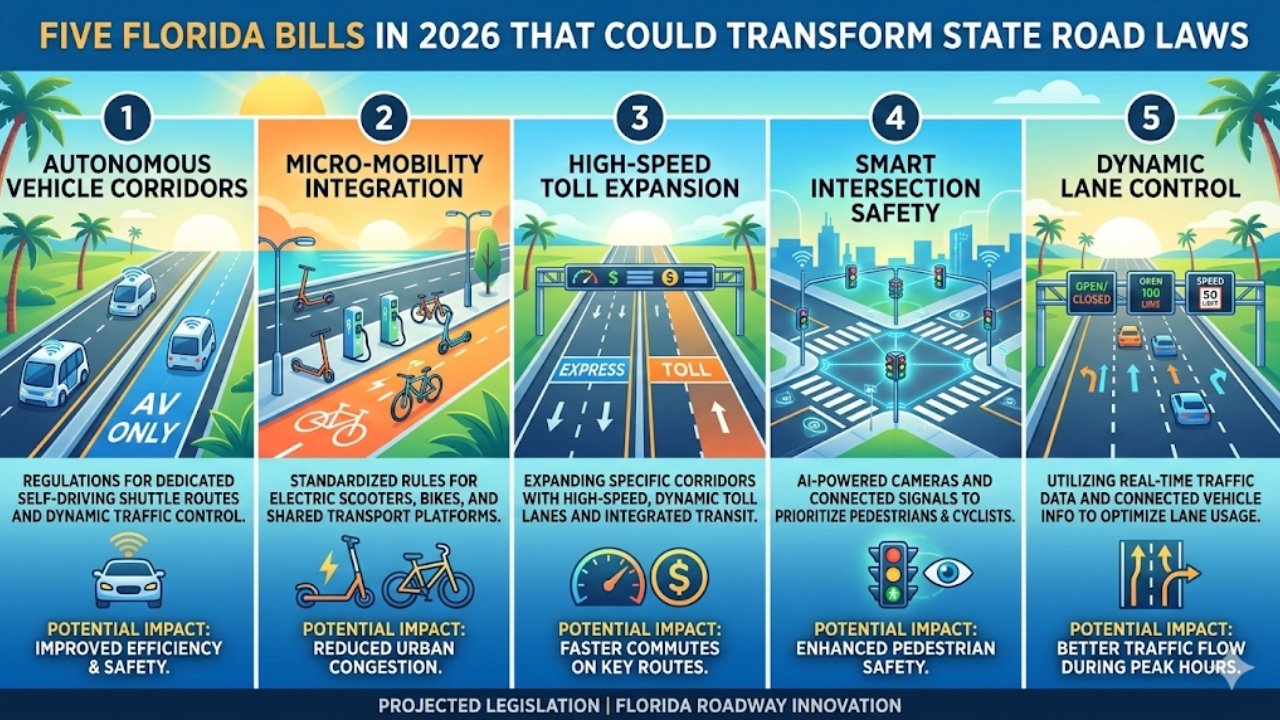
Florida’s 2026 legislative session promises major shifts in road laws, with five key bills targeting safety, technology, and infrastructure. These proposals address rising concerns over distracted driving, child protection, micromobility, school zones, and development impacts. Lawmakers aim to curb accidents while adapting to modern vehicles and urban growth.
Hands-Free Driving Mandate
Senate Bill 1152 seeks to ban drivers from holding phones entirely, even at stops. Current laws only prohibit texting, but this expands to all handheld use, mandating Bluetooth or built-in systems for calls and navigation. Sponsors argue it tackles enforcement gaps in distracted driving, a factor in thousands of Florida crashes yearly.
Booster Seats for Older Kids
House Bill 233 extends booster seat rules to children ages 6 to 8, unless they reach 4 feet 9 inches tall. Rep. Nan Cobb champions this to protect bigger kids still vulnerable in crashes. Florida’s existing mandates cover up to age 5, but data shows improper restraints contribute to child injuries on busy highways.
E-Bike Speed Controls
CS/SB 382, passed unanimously by the Senate, caps electric bike speeds at 10 mph near pedestrians within 50 feet on sidewalks or paths. Riders must yield and signal when passing. It also forms a Micromobility Safety Task Force with cops, doctors, and industry reps to study crashes and suggest fixes by October 2026.
| Bill | Key Change | Sponsor/Status | Potential Impact |
|---|---|---|---|
| SB 1152 | No handheld phones while driving | Filed pre-session | Reduces distractions; stricter fines |
| HB 233 | Boosters for ages 6-8 | Rep. Nan Cobb | Fewer child injuries in wrecks |
| CS/SB 382 | E-bike 10 mph limit near peds | Senate passed 37-0 | Safer shared paths; task force reports |
| CS/CS/SB 654 | Expanded school zone cameras | In committee | Better speed enforcement; hearings required |
| SB 498 | Beacons at high-speed school crosswalks | Sen. Ana Maria Rodriguez | Improved pedestrian visibility |
School Zone Enforcement Boost
CS/CS/SB 654 revises times for speed cameras in school zones and bans their use for general surveillance. It requires school boards to hold public hearings before installing bus infraction detectors. This balances safety with privacy, targeting violations during peak drop-off hours when kids are most at risk.
Safer School Crosswalks
SB 498 mandates hybrid beacons or flashing lights at new school crosswalks on roads over 35 mph. Sen. Ana Maria Rodriguez filed it after a repainting ban dimmed visibility statewide. These devices activate on demand, alerting drivers to pedestrians and potentially slashing struck-by incidents near campuses.
Development and Road Capacity
House Bill 97 tightens transportation concurrency for small counties, forcing plans to match road capacity before approving growth. Rep. Grow notes it prevents congestion from unchecked projects, ensuring developers fund upgrades. With Florida’s boom, this could ease taxpayer burdens on strained interstates.
These bills, if enacted, would modernize Florida’s roads for families, bikes, and self-driving tech pilots under expanded rules. Passage hinges on House action and Governor approval by spring, amid debates on enforcement costs versus lives saved.
FAQs
Q1: Will these raise fines?
Likely for violations like phone use or speeding, but details vary by bill.
Q2: When do they start?
Most July 1, 2026, if signed.
Q3: Do they affect tourists?
Yes, all drivers on Florida roads must comply.