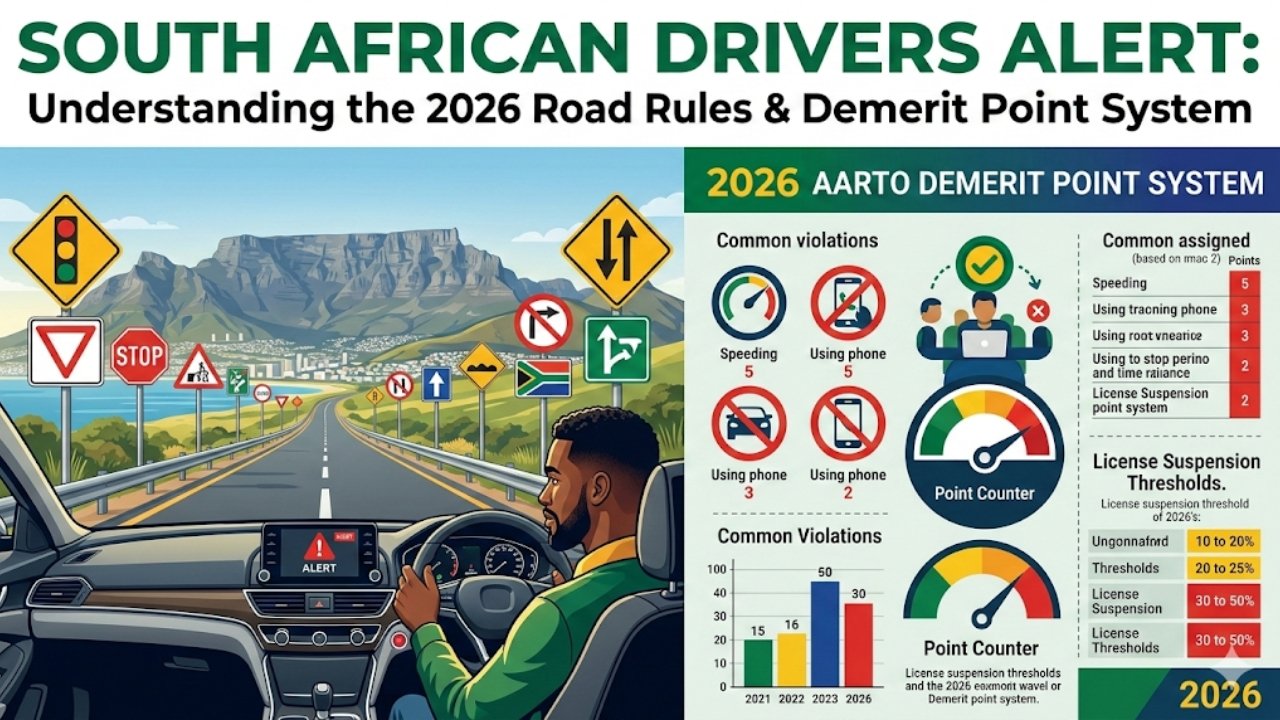
South African roads have long been among the world’s most dangerous, with thousands of lives lost each year to preventable accidents. As of July 2026, the Administrative Adjudication of Road Traffic Offences (AARTO) Act finally rolls out nationwide, bringing a fresh demerit point system designed to change driver habits for good. This isn’t just another fine hike; it’s a smarter way to hold repeat offenders accountable while giving responsible drivers breathing room.
AARTO’s Big Shift from Old Ways
Gone are the days when a traffic ticket meant a criminal court date that could drag on forever. AARTO introduces an administrative process for minor infringements like speeding or running reds, handled efficiently by the Road Traffic Infringement Agency (RTIA). Serious crimes such as drunk driving still land you in court with criminal charges, but everyday slip-ups now trigger points on your clean slate license record. Every licensed driver starts at zero points, building up only through violations caught by cameras or officers.
How the Demerit Points Work
You begin with a 15-point threshold for full licenses, while learners get just six before restrictions bite. Points accumulate for offenses: one for small stuff like illegal parking, up to six for negligent driving. Hit the limit? Your license gets suspended—first for three months, escalating to cancellation if you don’t learn your lesson. The beauty lies in rehabilitation; pay fines early, attend traffic school, or reduce points by driving clean for three years.
Common Offenses and Their Point Costs
Here’s a quick breakdown of typical violations under the new rules. AI-powered cameras now spot seatbelt neglect and phone use too, making evasion tougher.
| Offense | Demerit Points | Fine Range (ZAR) |
|---|---|---|
| Speeding (1-10 km/h over) | 1 | 500-1,000 |
| Running Red Light | 2 | 1,500 |
| Phone While Driving | 2 | 1,500 |
| No Seatbelt | 1 | 1,000 |
| Reckless Driving | 6 | Court + Fine |
| Drunk Driving | Court (points vary) | Criminal Penalty |
Rollout Timeline and Pilot Lessons
The system kicked off in pilot areas like Johannesburg and Tshwane, now expanding to all 69 municipalities by mid-2026 after a delay from December 2025. Early data from pilots reveals a drop in repeat offenses, as drivers check their AARTO portal for notices and points. Fleet operators face extra scrutiny, with company vehicles risking blocks if points overload.
Reducing Points and Avoiding Suspension
Smart drivers can slash points through official channels. Complete an accredited defensive driving course to shave off four points, or keep a spotless record for three years to reset fully. Courtesy letters give 32 days to pay or contest before escalation to enforcement orders—no more ignoring fines without consequences. Appeals go through RTIA panels, keeping the process fair and paperless via the AARTO app.
Tech Upgrades Watching Your Drive
AI cameras blanket highways, nabbing everything from license disc failures to weaving. Integration with eNaTIS means instant license checks, blocking renewals for high pointers. Professional drivers like taxi operators must stay under limits or lose livelihoods, pushing operators to train staff rigorously. This tech-human blend promises fewer fatalities if drivers adapt.
Why This Matters for Safer Roads
AARTO targets South Africa’s shocking stats—over 12,000 road deaths yearly—by curbing recidivism, not just punishing one-offs. Early compliance in pilots suggests cultural shifts, with fines funding better enforcement. Drivers, check your status monthly; one lapse too many could ground you.
FAQs
Q: When does AARTO fully start?
A: National rollout begins July 1, 2026.
Q: Can I lose my license permanently?
A: Yes, after multiple suspensions or 15+ points.
Q: How do I check my points?
A: Via the AARTO website or app with your ID.