The landscape of federal financial assistance often sparks significant interest and occasional confusion. As we navigate through February 2026, many Americans are inquiring about a rumored $2,000 Federal Direct Deposit. While the idea of a universal stimulus check is a frequent topic of discussion in policy circles and online forums, it is essential to distinguish between proposed legislative ideas and the actual benefit payments currently being distributed by the Internal Revenue Service (IRS) and the Social Security Administration (SSA). This guide provides a comprehensive breakdown of the current financial reality, the status of proposed “dividends,” and the actual payment schedules for February.
The Truth Behind the $2,000 Payment Rumors
Much of the current buzz regarding a $2,000 payment stems from a proposal for a “Tariff Dividend.” This concept involves redistributing federal revenue generated from import tariffs directly to American taxpayers. However, it is vital to clarify that as of February 2026, this proposal has not been signed into law as a standalone stimulus check. While the administration and certain members of Congress have discussed mid-2026 as a potential target for such a rollout, no $2,000 “bonus” check has been authorized for immediate deposit this month. Instead, the “direct deposits” most people are seeing are related to the standard 2026 tax filing season and annual benefit adjustments.
Who Qualifies for Significant Federal Payments?
While a universal $2,000 check does not exist for everyone this month, many households will indeed receive amounts near or exceeding $2,000 through existing federal programs. The primary qualifiers for large direct deposits in February include taxpayers who filed their 2025 tax returns early and are eligible for the Earned Income Tax Credit (EITC) or the Additional Child Tax Credit (ACTC). Additionally, high-earning Social Security recipients may see monthly benefits that exceed this threshold. Eligibility for these standard payments is based on income levels, filing status, and the number of dependents claimed on a tax return.
Federal Payment Overview & Expected Timelines
| Payment Type | Typical Amount | Primary Eligibility | Expected Date |
| Tax Refund (EITC/ACTC) | $2,000 – $7,000+ | Low-to-moderate income earners | Late Feb – March 2 |
| Social Security (Retirement) | Avg. $2,071 | Retired workers (Age 62+) | Variable (Wednesdays) |
| SSDI (Disability) | Avg. $1,630 | Individuals with disabilities | Variable (Wednesdays) |
| SSI (Supplemental) | Max $994 | Low-income seniors/disabled | Feb 2 (Jan 30 early pay) |
Social Security Payment Schedule for February 2026
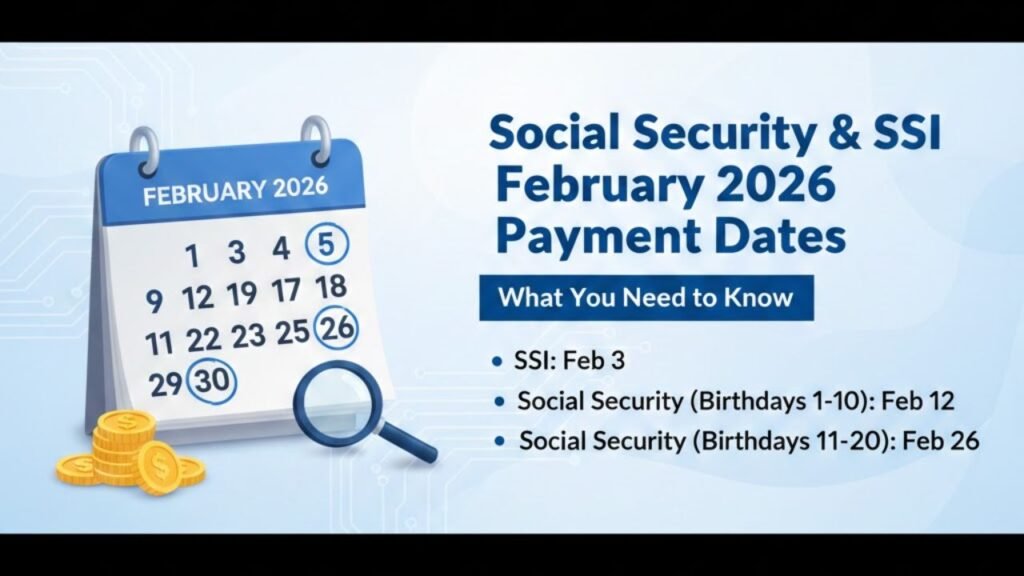
For those receiving Social Security or Disability (SSDI), February 2026 marks the second month where the 2.8% Cost-of-Living Adjustment (COLA) is fully integrated into payments. Because the average retired worker’s benefit has risen to approximately $2,071, many beneficiaries are seeing a “direct deposit” over the $2,000 mark for the first time. The SSA distributes these funds on a staggered schedule based on the recipient’s birth date. If your birthday falls between the 1st and 10th, you likely received your deposit on February 11. Those born between the 11th and 20th saw theirs on February 18, and those born from the 21st to the 31st can expect it on February 25.
IRS Tax Refunds and Early Filers
The IRS officially began processing 2025 tax returns in late January 2026. For millions of Americans, the February direct deposit they are seeing is actually their federal tax refund. Due to the “One, Big, Beautiful Bill” legislation, new deductions for car loan interest and enhanced credits for seniors have increased the average refund amount. Under the PATH Act, the IRS is legally required to hold refunds for those claiming the EITC or ACTC until mid-February to prevent fraud. Consequently, the first wave of these significant direct deposits is hitting bank accounts between February 20 and March 2, 2026.
How to Ensure Your Direct Deposit Arrives
To receive any federal payment—whether it is a tax refund or a monthly benefit—the government now strongly mandates the use of Direct Deposit. In late 2025, an executive order began phasing out paper checks to modernize the system. If you are expecting a payment but have not updated your banking information, the IRS may freeze the funds and send a CP53E notice. To ensure your money arrives without delay, use the “Where’s My Refund?” tool on the IRS website or log into your “my Social Security” account to verify that your routing and account numbers are current.
Final Summary of the $2,000 Figure
In summary, while there is no “free” $2,000 stimulus check being handed out to every citizen this February, the figure is highly relevant for two groups: Social Security recipients whose adjusted monthly benefits now exceed $2,000, and early tax filers receiving their annual refunds. If you see headlines promising a “New $2,000 Federal Check,” always verify the source through IRS.gov or SSA.gov. Most of these claims refer to either the average size of a tax refund or a proposed legislative dividend that has yet to clear the necessary legal and budgetary hurdles in Congress.
FAQs
Q1. Is the IRS sending a new stimulus check in February 2026?
No. There is no new stimulus check. Deposits occurring now are either standard Social Security payments or tax refunds for the 2025 tax year.
Q2. Why is my Social Security payment higher this month?
All Social Security and SSI benefits increased by 2.8% starting in January 2026 due to the annual Cost-of-Living Adjustment (COLA).
Q3. When will the proposed $2,000 Tariff Dividend be paid?
This is currently a proposal with a suggested target of mid-2026, but it has not been passed into law or scheduled for distribution.