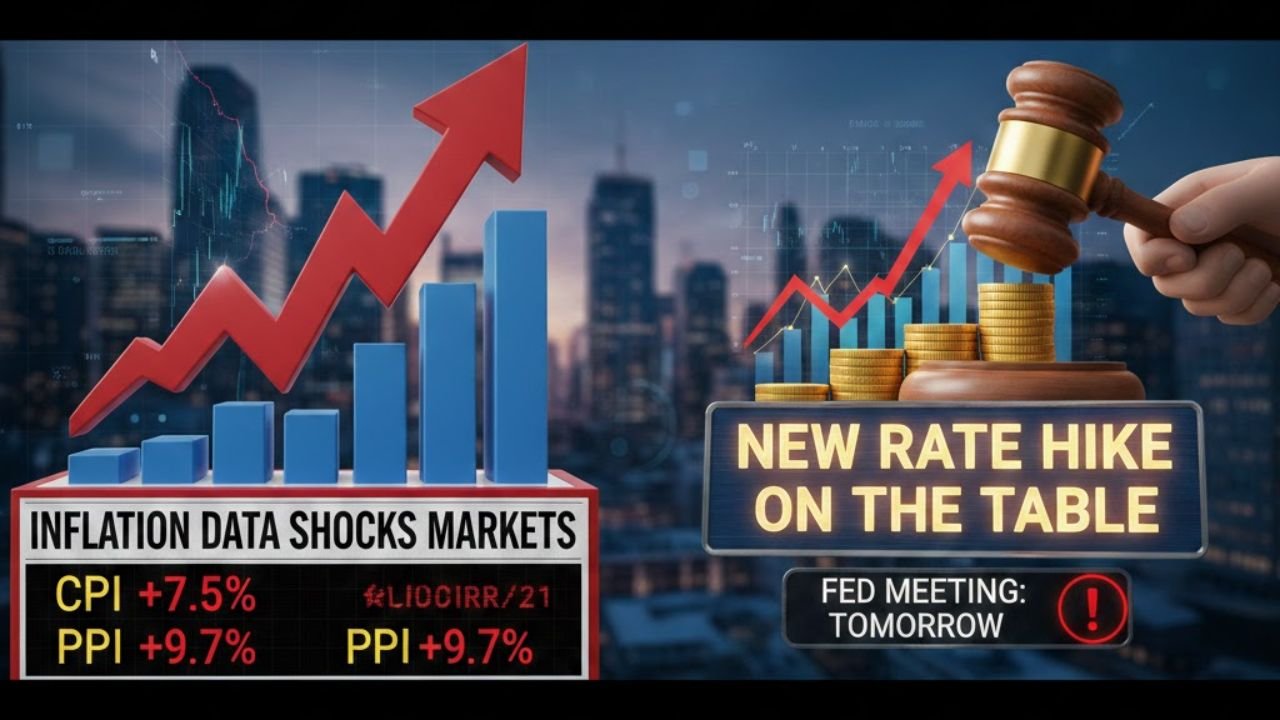
The financial world was sent into a tailspin this week as fresh inflation figures exceeded even the most pessimistic forecasts. Investors, who had largely priced in a period of cooling prices and potential monetary easing, were caught off guard by the resilience of consumer costs. This sudden “inflation shock” has effectively shattered the narrative of a smooth economic “soft landing,” leading to a sharp sell-off in both equities and bonds as the reality of a more aggressive monetary landscape sets in.
The Numbers Behind the Market Panic
Data released for the early months of 2026 shows that while headline inflation has dipped slightly due to falling energy costs, the underlying “core” metrics tell a far more stubborn story. In the United States, January’s Consumer Price Index (CPI) showed a persistent monthly rise of 0.3% in core prices. While the year-over-year headline rate slowed to 2.4%, the stickiness of service-sector inflation and rising shelter costs have signaled to the market that the “last mile” of the inflation fight is proving to be the hardest.
Why Markets Are Reacting So Violently
The primary reason for the market’s visceral reaction is the complete recalibration of interest rate expectations. Throughout late 2025, traders were betting on a series of rate cuts to begin in early 2026. However, the latest data suggests that the Federal Reserve and other major central banks like the Bank of England may have to keep rates “higher for longer.” In some cases, the conversation has even shifted from when the next cut will happen to whether another hike is necessary to finally break the back of persistent price increases.
The Shelter and Service Trap
A significant portion of the current inflationary pressure is rooted in the “shelter” category. Rent and owners’ equivalent rent continue to exert upward pressure on the CPI, often with a lag that complicates the central bank’s decision-making. Additionally, the labor market remains surprisingly tight, with unemployment hovering near historic lows of 4.3% to 4.4%. This strength, while positive for workers, fuels wage growth that service-based companies often pass on to consumers in the form of higher prices for everything from healthcare to travel.
New Economic Headwinds: Tariffs and Fiscal Policy
Adding fuel to the fire are emerging concerns over trade policies and fiscal expansion. Analysts have noted that the lagged effects of recently implemented tariffs are beginning to filter through to consumer goods. When importers exhaust their existing stockpiles, they are forced to adjust prices to account for higher entry costs. Simultaneously, significant government spending and a widening fiscal deficit are providing a tailwind to demand, making it even more difficult for monetary policy alone to bring inflation back down to the elusive 2% target.
The Federal Reserve’s Hawkish Pivot
Fed Chair Jerome Powell and other committee members have shifted their tone from cautiously optimistic to decidedly hawkish. At the most recent FOMC meetings, the message was clear: the Fed is “well-positioned” to wait and see. The nomination of a new Fed chair and the upcoming expiration of Powell’s term in May 2026 add another layer of uncertainty. Markets hate a vacuum, and the lack of a clear downward path for interest rates has led to a spike in Treasury yields, which in turn devalues the future earnings of high-growth tech stocks.
Global Ripples and Regional Divergence
The inflation shock is not limited to the United States. In Australia, headline inflation remained stuck at 3.8% in January, driven by a massive 32.2% surge in electricity costs following the end of government rebates. Conversely, parts of Europe are seeing a more pronounced slowdown. This “inflation gap” between the U.S. and the rest of the world is causing significant volatility in currency markets, as the U.S. Dollar strengthens against the Euro and the Yen, further complicating global trade dynamics.
Investment Strategy in a High-Rate Environment
For investors, the current environment demands a pivot toward quality and resilience. Historically, during periods of sticky inflation and high interest rates, “value” stocks—companies with strong cash flows and tangible assets—tend to outperform speculative growth companies. Fixed-income investors are also moving toward the “belly of the curve,” favoring intermediate-term bonds that offer attractive yields without the extreme volatility of long-term debt. The “wait-and-see” approach is no longer just for central bankers; it has become the mantra for the cautious investor as well.
FAQs
Q1 Why did the stock market fall if inflation is technically lower than last year?
While the headline number is lower, “Core” inflation remains high. Markets had already expected lower numbers, so any “stickiness” or slight upside surprise suggests that interest rates will stay high for much longer than previously hoped.
Q2 Is a new interest rate hike actually possible in 2026?
Yes. While many analysts still expect a “pause,” several central bank members have indicated that if inflation does not continue to trend toward 2%, a “insurance hike” may be necessary to prevent expectations from becoming unanchored.
Q3 How do tariffs affect the inflation data?
Tariffs act as a tax on imported goods. When companies can no longer absorb these costs, they raise prices for consumers. This creates “cost-push” inflation, which is particularly difficult for central banks to control through interest rates alone.