The 2026 tax season has officially arrived, bringing with it a wave of significant changes that are reshaping how millions of Americans view their annual IRS filings. As the Internal Revenue Service processes the first major batches of 2025 returns, early data indicates a dramatic shift in refund amounts. Driven by the legislative updates of the “One Big Beautiful Bill,” taxpayers are navigating a landscape of expanded deductions and historically high payouts. This year, the focus isn’t just on receiving a check, but on maximizing new provisions that target specific worker groups, particularly those in service industries.
Understanding the Rise to a $4,167 Average Refund
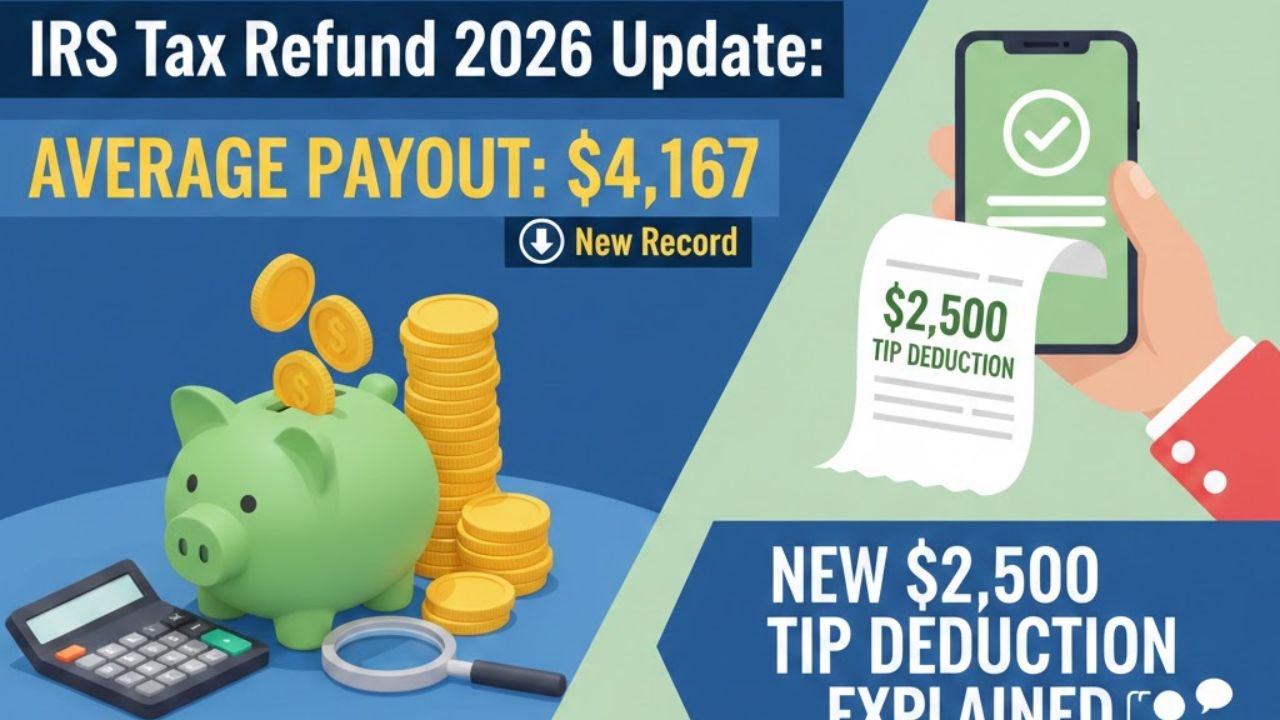
While the very first weeks of the 2026 filing season saw a modest average of approximately $2,290, financial analysts and government projections suggest a massive upward trend. According to recent reports from the White House and major financial institutions like Piper Sandler, the final average refund for the 2026 season is expected to climb toward the $4,000 mark, with some projections specifically highlighting a potential $4,167 average for certain demographics. This increase is largely attributed to the retroactive nature of the 2025 tax law changes, which adjusted tax brackets for inflation and significantly expanded individual credits. For the average household, this represents an 18% to 30% jump compared to previous years, marking one of the most substantial year-over-year increases in IRS history.
The New $25,000 Tip Deduction Explained
One of the most talked-about features of the 2026 tax season is the “No Tax on Tips” provision. While early rumors suggested a smaller figure, the IRS has confirmed that eligible workers can now deduct up to $25,000 in qualified tip income from their federal taxable income. This is a game-changer for bartenders, servers, stylists, and gig workers. It is important to note that this is a deduction, not a dollar-for-dollar credit; it reduces the total income the IRS uses to calculate your tax bill. To qualify, tips must be voluntary and received in a “customary” tipped occupation. Starting this year, the IRS is also updating Form W-2 to help employers and employees track these amounts more accurately, though for the current filing, taxpayers can rely on their reported 1099-NEC or personal logs to claim the benefit.
Key 2026 Tax Season Statistics at a Glance
To help you understand where your refund stands compared to national averages and new limits, the following data table summarizes the early 2026 filing trends and the major legislative caps currently in place.
| Category | 2025 Average/Limit | 2026 Projected/New Limit | Percentage Change |
| Average Tax Refund | $2,939 | $3,800 – $4,167 | +29.1% (Est.) |
| Standard Deduction (Single) | $15,750 | $16,100 | +2.2% |
| Tip Income Deduction | $0 | $25,000 | New Provision |
| Overtime Pay Deduction | $0 | $12,500 | New Provision |
| Direct Deposit Average | $2,165 | $2,388 | +10.3% |
Impact of the “One Big Beautiful Bill” on Families
Beyond tips and overtime, the legislative overhaul known as the “One Big Beautiful Bill” has refreshed the Child Tax Credit (CTC) and the Earned Income Tax Credit (EITC). For the 2026 season, a portion of the adoption credit has become refundable, and the thresholds for reporting third-party platform payments (like those from PayPal or Venmo) have been raised to $20,000. These adjustments are designed to keep more money in the pockets of middle-class families. By reducing the Modified Adjusted Gross Income (MAGI) through the new tip and overtime deductions, many filers find they now qualify for higher tiers of these family-centric credits, compounding their total refund amount.
Who Qualifies for the Tip and Overtime Deductions?
The IRS has identified nearly 70 different job categories that are eligible for the new deductions. This includes traditional service roles like restaurant staff and casino dealers, but it also extends to personal trainers and even some workers in the entertainment sector. The overtime deduction allows workers to subtract the “half” portion of their “time-and-a-half” pay—up to a $12,500 limit. However, there are income “phase-outs” to keep in mind. If your MAGI exceeds $150,000 as a single filer or $300,000 for married couples filing jointly, the amount you can deduct begins to decrease. These rules ensure that the bulk of the tax relief is directed toward low-to-middle-income earners who rely heavily on extra hours and gratuities.
Timeline: When to Expect Your 2026 Payout
Speed remains a priority for the IRS this year. The agency continues to emphasize that filing electronically and choosing direct deposit is the fastest route to your money, with most refunds issued in fewer than 21 days. However, due to the PATH Act, refunds involving the EITC or the Additional Child Tax Credit (ACTC) were held until mid-February. As of late February 2026, those holds have lifted, and the IRS expects most of these “family-related” refunds to land in bank accounts by March 2. Taxpayers can use the “Where’s My Refund?” tool on the IRS website for the most accurate, real-time tracking of their specific payout.
Maximizing Your Refund Before the April Deadline
To ensure you hit the higher end of the refund spectrum, it is crucial to gather all documentation for these new deductions before filing. If you are a tipped employee, make sure your employer has correctly categorized your income, or keep detailed logs if you are an independent contractor. With the shift toward a digital-first system, many tax software platforms have already integrated the new Schedule 1-A, which is where these additional deductions are calculated. Taking the time to properly claim the $25,000 tip deduction or the $12,500 overtime deduction can be the difference between a standard return and a record-breaking one.
FAQs
Q1. Is the $25,000 tip deduction automatic? No, you must actively claim it. Eligible workers should use the new Schedule 1-A when filing their Form 1040 to deduct their qualified tip income from their total taxable income.
Q2. Can I get a refund if I didn’t have enough tax withheld? While deductions reduce your tax bill, a “refund” usually occurs when your total credits and payments exceed what you owe. The new refundable portion of certain credits means more people may receive a check even with low withholding.
Q3. When is the last day to file my 2025 taxes in 2026? The federal deadline to file your 2025 individual income tax return and pay any tax owed is Wednesday, April 15, 2026.