As the calendar turns toward March 2026, millions of Americans are keeping a close watch on their bank accounts for their next Social Security installment. Navigating the payment schedule of the Social Security Administration (SSA) can often feel like solving a puzzle, particularly when weekends or federal holidays shift the expected dates. For March 2026, there is a significant change specifically for those receiving Supplemental Security Income (SSI). Because March 1 falls on a Sunday, the federal government mandates that payments be issued on the preceding business day. This means many recipients will technically see their “March” check arrive in late February.
Understanding these logistical shifts is crucial for household budgeting, especially for seniors and individuals with disabilities who rely on these funds for essential costs like rent, medicine, and utilities. While the timing might change slightly, the fundamental rules governing these disbursements remain consistent. For retirement and disability beneficiaries (SSDI), the schedule follows a staggered birth-date system that ensures the SSA can process over 70 million payments without overwhelming the financial system. Let’s dive into the specifics of who gets paid when this month.
The SSI Schedule Shift for March
The most important update for March 2026 concerns the nearly 7.5 million people who receive SSI. Under standard rules, SSI is distributed on the first day of every month. However, since March 1, 2026, is a Sunday, the SSA is required to send those funds out on Friday, February 27. While this might feel like receiving an extra check in February, it is actually just an early delivery of your March benefits. Consequently, if you are looking for a deposit on March 1, you will not find one; the money should already be in your account from the final Friday of February.
Wednesday Staggered Payments Based on Birth Date
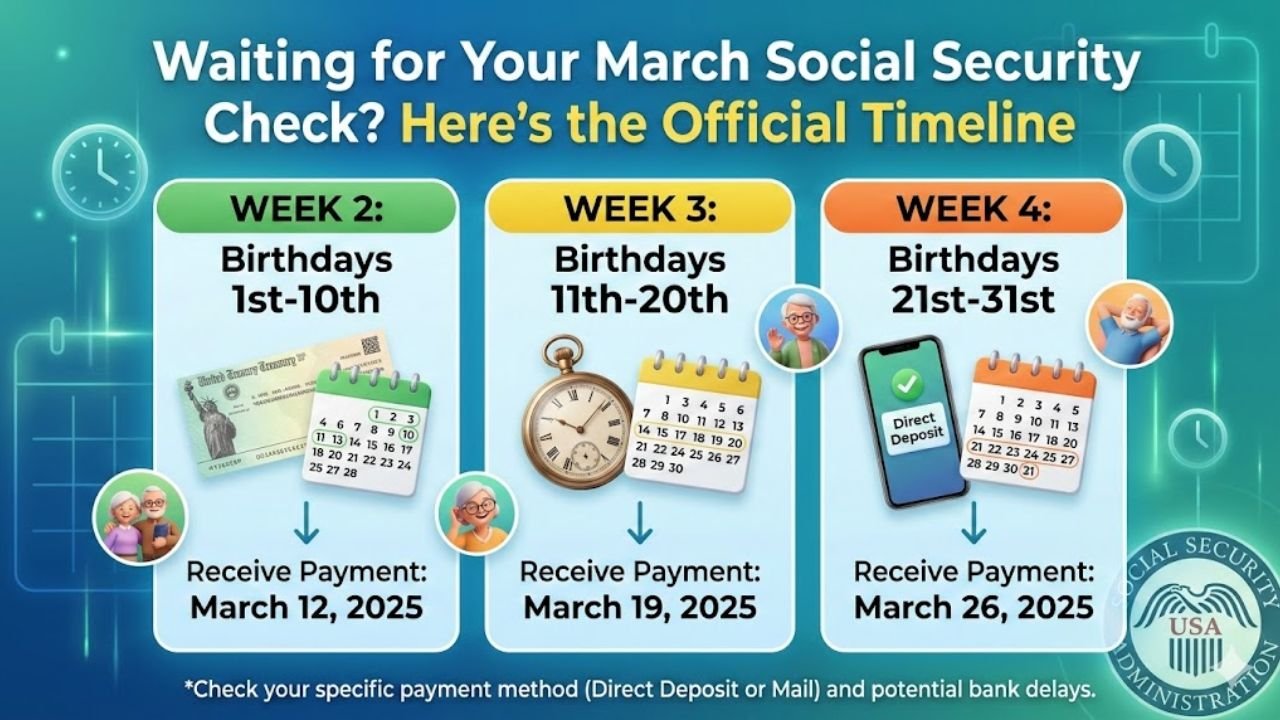
For the majority of retirees and those on Social Security Disability Insurance (SSDI), the payment date is determined by the day of the month on which they were born. This system divides recipients into three main groups to balance the workload throughout the month. If your birthday falls between the 1st and the 10th, your payment is scheduled for the second Wednesday of the month. Those born between the 11th and 20th receive theirs on the third Wednesday, and anyone born from the 21st to the 31st is paid on the fourth Wednesday.
Official March 2026 Payment Dates
To help you plan your finances, here is the clear breakdown of the payment timeline for the month of March 2026:
| Recipient Category | Birth Date | Official Payment Date |
| SSI Beneficiaries | N/A | Friday, February 27 |
| Pre-May 1997 Recipients | N/A | Tuesday, March 3 |
| Group 1 (Retirement/SSDI) | 1st – 10th | Wednesday, March 11 |
| Group 2 (Retirement/SSDI) | 11th – 20th | Wednesday, March 18 |
| Group 3 (Retirement/SSDI) | 21st – 31st | Wednesday, March 25 |
Special Rules for Long-Term Beneficiaries
There is a specific group of people who do not follow the Wednesday birth-date schedule. If you began receiving Social Security benefits before May 1997, or if you receive both Social Security and SSI simultaneously, your payment date is fixed to the 3rd of the month. For March 2026, the 3rd falls on a Tuesday, which is a standard business day. Therefore, you can expect your funds to arrive exactly on time without any weekend-related adjustments. This group often includes older retirees and those with complex benefit structures.
The Impact of the 2026 COLA Increase
Beneficiaries should also keep in mind that March checks reflect the 2.8% Cost-of-Living Adjustment (COLA) that went into effect at the start of the year. This increase was designed to help offset the rising costs of inflation. While the average monthly increase is approximately $56 for individuals, the exact amount varies based on your primary insurance amount and any deductions for Medicare Part B premiums. If you notice a slight difference in your check compared to late last year, this annual adjustment is the reason.
What to Do If Your Payment Is Delayed
While the SSA is remarkably efficient, delays can occasionally occur due to banking holidays or local mail issues. The official guidance from the Social Security Administration is to wait at least three additional mailing days before contacting them to report a missing payment. Before calling, it is always wise to check with your bank or financial institution, as they may have a “pending” status on the deposit that hasn’t yet cleared into your available balance. Using the “my Social Security” online portal is the fastest way to verify that your payment has been processed.
Budgeting for a “No-Payment” Month
The early arrival of the SSI check in late February creates a unique challenge: there will be no SSI payment during the actual 31 days of March. For households that operate on a strict month-to-month budget, it is vital to remember that the money arriving on February 27 must last until the April 1 payment. This “gap” can be tricky to manage, so financial experts recommend setting aside the February 27 funds specifically for March expenses to avoid a shortfall toward the end of the month.
Summary of the March Timeline
In conclusion, the March 2026 timeline is a mix of early arrivals and standard Wednesday rotations. SSI recipients lead the way with a late February deposit, followed by the “pre-1997” group on March 3, and finally the staggered Wednesday groups through the middle and end of the month. By staying informed about these dates and the specific rules of the SSA, you can ensure your financial planning stays on track throughout the spring season.
FAQs
Q1 Why did I receive two SSI payments in February?
You didn’t actually receive a bonus; the first payment was your regular February benefit, and the second (received on February 27) is your March benefit arriving early because March 1 is a Sunday.
Q2 Will my payment date change if I move?
No, your payment date is based on your birth date or the date you first started receiving benefits, not your location. However, you must update your address with the SSA to ensure you receive important notices.
Q3 How long should I wait if my check doesn’t arrive on the scheduled Wednesday?
The SSA recommends waiting three business days past the scheduled date before calling. Often, the delay is on the side of the bank’s processing times rather than the government’s disbursement.