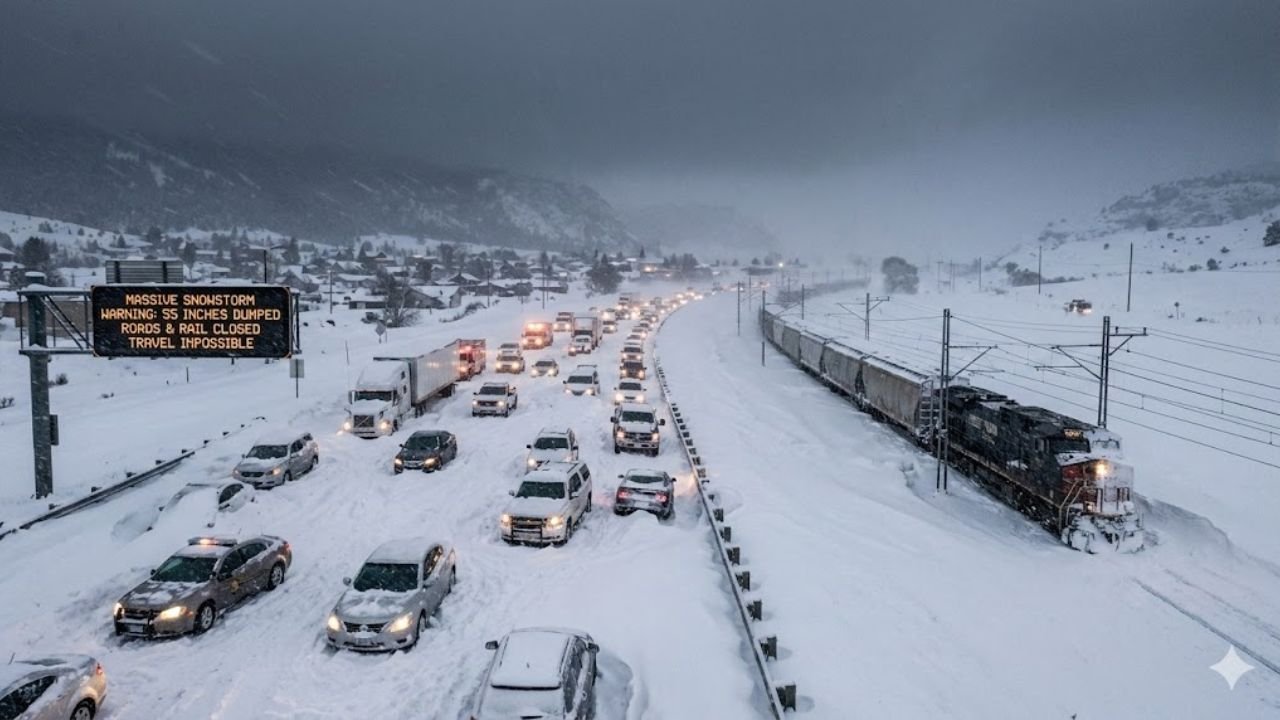
The winter of 2026 has taken a historic and aggressive turn as a massive weather system, recently dubbed “The Blizzard of 2026,” sweeps across the northern hemisphere. Meteorologists are sounding the alarm for a rare “super-load” snowfall event where specific mountain ranges and high-altitude corridors could see accumulations reaching an incredible 55 inches. This is not merely a heavy snowfall; it is a transformative weather event that threatens to paralyze regional infrastructure, bury suburban neighborhoods, and halt the pulse of commerce for days. As the barometric pressure plunges, the sheer weight of the impending snow poses a structural threat to buildings and a logistical nightmare for emergency responders.
Historic Snow Totals and the Atmospheric Setup
The current meteorological setup is a perfect storm of Arctic air colliding with moisture-rich maritime currents. This “bomb cyclone” effect creates a feedback loop of intense precipitation. While coastal cities are bracing for 18 to 24 inches, the real danger lies in the “upslope” regions where the terrain forces the air to rise and dump its entire moisture load. Forecasters have identified several zones where the snowfall rates could hit 4 inches per hour, leading to the projected 55-inch peak in high-elevation spots. This level of accumulation is enough to submerge standard vehicles entirely and reach the second-floor windows of many homes.
The Gridlock: Roads and Rail Lines Under Siege
Transportation is the first casualty of a storm of this magnitude. State Departments of Transportation have already begun preemptive closures of major interstates, citing “zero-visibility” and “impossible passability.” For rail lines, the situation is even more dire. Heavy, wet snow combined with freezing temperatures can warp tracks, freeze switches, and down the overhead catenary wires that power electric locomotives. Amtrak and regional commuter services like the LIRR and NJ Transit have already suspended operations on multiple branches, as the specialized “snow-fighter” trains struggle to keep up with the rapid accumulation.
With 55 inches of snow comes immense physical weight. Every branch and power line becomes a liability as the “snow load” exceeds the structural capacity of local utility grids. Utility companies are warning that if the snow is wet and heavy, the resulting power outages could last for a week or longer. Repair crews, despite being pre-positioned, cannot safely reach downed lines until the wind subsides and the roads are cleared enough for heavy bucket trucks. This creates a dangerous scenario for residents relying on electric heat during the sub-zero temperatures following the storm’s departure.
Economic Ripple Effects on Supply Chains
A storm that overwhelms roads and rail lines does not just stop people; it stops the flow of goods. The current disruption is expected to cause a significant bottleneck in the delivery of medicine, food, and fuel. Major trucking hubs have issued “stay-put” orders for their fleets, fearing that drivers will be stranded in remote areas where rescue is difficult. Since rail freight is the backbone of heavy industrial transport, the suspension of these lines will likely lead to temporary shortages in construction materials and consumer electronics, with the economic cost of the storm estimated to reach into the billions.
Emergency Response and Public Safety Measures
Governors across the impacted regions have declared States of Emergency, activating the National Guard to assist with snow removal and wellness checks. Public safety officials are urging citizens to stay off the roads to allow snowplows to operate. In areas expecting the full 55 inches, “Snow-Mageddon” protocols are in place, which include mandatory travel bans. The priority remains keeping access open to hospitals and emergency centers, though even these routes are currently at the mercy of the unrelenting drifts that can reach heights of 10 feet or more.
Recovery and the Long Dig Out
Once the clouds clear, the true work begins. Recovering from nearly five feet of snow is a process that takes weeks, not days. The “dig out” involves more than just shoveling; it requires heavy industrial loaders to move mountains of snow to “snow farms” or melting stations. Cities will have to manage the risk of flooding as the massive snowpack eventually begins to thaw. For now, the focus remains on survival and patience as nature reminds the modern world of its overwhelming power to reset the pace of life.
FAQs
Q1 Is it safe to drive after the snow stops falling?
No. Even after the snow stops, “black ice” and deep drifts make roads treacherous. Authorities recommend waiting until plows have completed at least two passes and salt treatments have had time to work.
Q2 What should I do if my roof is covered in 55 inches of snow?
Extreme accumulations can cause roof collapses. If you hear creaking or see new cracks in your ceiling, evacuate immediately. Professionally removing snow with a roof rake is recommended for safety.
Q3 How long will the rail lines be suspended?
Service depends on track inspections and the clearing of frozen switches. Most major rail lines anticipate at least a 48-hour recovery period after the storm concludes to ensure passenger safety.