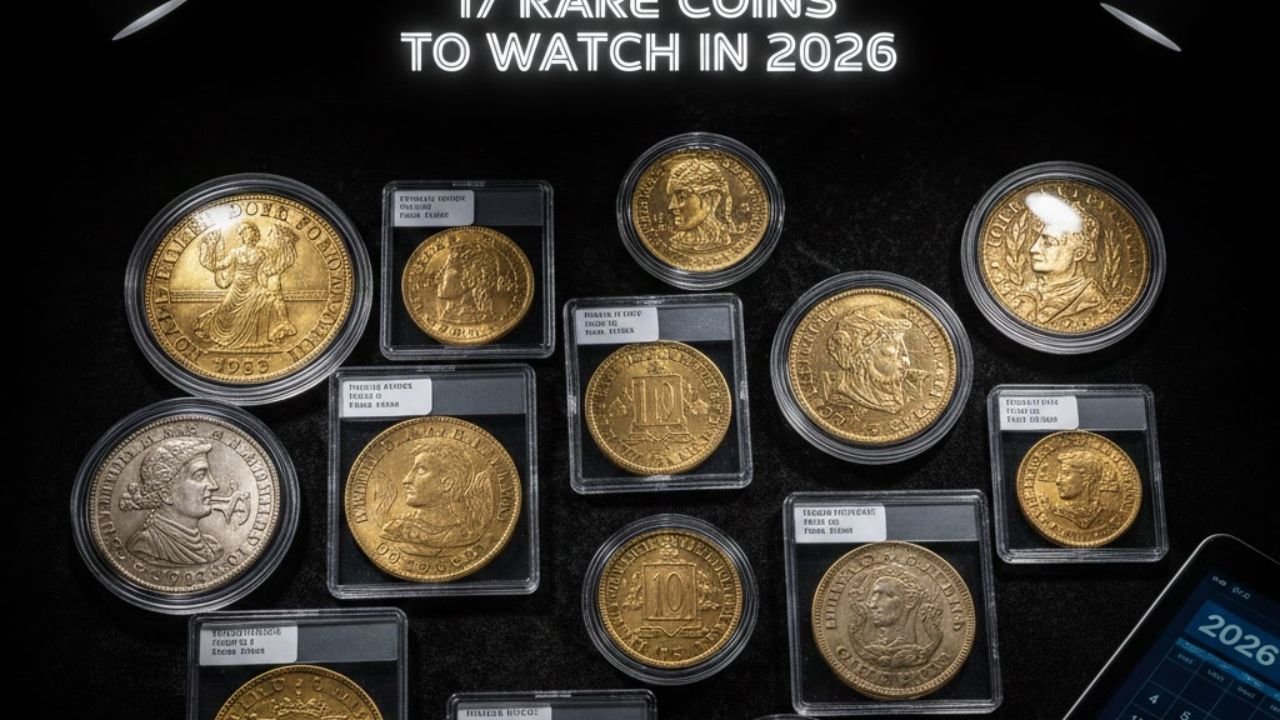
The world of numismatics is witnessing a historic surge in 2026, as rare coins transition from mere hobbyist items to elite alternative investments. With gold prices reaching unprecedented heights and the supply of historical artifacts dwindling, certain “treasure” coins are now crossing the million-dollar threshold with regularity. Collectors and investors alike are keeping a sharp eye on 17 specific specimens that represent the pinnacle of rarity, error, and history. These coins are not just currency; they are portable assets that have outpaced traditional market trends over the last decade.
The Crown Jewels of American Numismatics
At the very top of the 2026 watch list is the legendary 1794 Flowing Hair Silver Dollar. Widely believed to be the first silver dollar ever struck by the United States Mint, this coin is the “holy grail” for serious collectors. In pristine condition, it has already seen auction prices exceed $10 million, and market analysts expect any high-grade specimen surfacing this year to challenge that record. Close behind is the 1933 Double Eagle, a gold coin that was once ordered to be melted down but survived in tiny numbers. Its legal status as a privately owned gold piece makes it a unique financial instrument and a focal point for million-dollar bids.
Wartime Errors and Copper Secrets
The year 2026 has brought renewed interest in “off-metal” errors, particularly those from the World War II era. The 1943 Copper Lincoln Penny remains the most famous error in history, created when a few copper planchets were left in the press as the Mint switched to zinc-coated steel. Conversely, the 1944 Steel Lincoln Penny—an error in the opposite direction—is equally sought after. These humble-looking cents are now crossing the million-dollar mark because they represent a specific, chaotic moment in American industrial history that can never be replicated.
The “King of Coins” and 19th-Century Rarities
The 1804 Draped Bust Silver Dollar continues to hold its title as the “King of American Coins.” Despite the date, these were actually struck in the 1830s as diplomatic gifts, making them a fascinating study in numismatic “restrikes.” There are only 15 known specimens in existence, categorized into three distinct classes. For 2026, the appearance of any Class I specimen is expected to draw international headlines. Similarly, the 1894-S Barber Dime is a major watch item; with only 24 originally minted and roughly 9 known today, it remains one of the rarest 10-cent pieces in the world.
Gold Rarity and the Saint-Gaudens Legacy
Beyond the 1933 error, the Saint-Gaudens series offers several other million-dollar contenders. The 1907 Ultra High Relief Double Eagle is considered by many to be the most beautiful coin ever produced. Its sculptural depth was so significant that it proved impractical for circulation, leading to a very small production run. In 2026, as investors seek “hard assets” to hedge against inflation, these gold masterpieces are seeing a massive influx of institutional capital. The 1927-D Double Eagle is another standout, as most of the mintage was melted down, leaving only about a dozen survivors for the entire global market.
Modern Errors and Transitional Varieties
One of the most exciting trends this year is the rise of modern “mule” errors to the million-dollar conversation. A prime example is the 2000-P Sacagawea Mule, which features the obverse of a Washington Statehood Quarter. While not as old as the 18th-century dollars, its extreme rarity and the mistake’s visual impact have made it a favorite for “new money” investors. Additionally, the 1955 Doubled Die Lincoln Cent, while more common than others on this list, is seeing its highest-graded specimens approach six-figure and million-dollar valuations due to the massive demand for iconic error coins.
Why the 2026 Market is Exploding
Several factors are converging to make 2026 a landmark year for rare coins. The price of gold has created a “floor” for gold-based rarities, but the “numismatic premium”—the value added due to rarity and history—is where the real growth is happening. Auction houses are reporting that a new generation of digital-native investors is entering the space, viewing rare coins as “physical NFTs” that have a 200-year track record of value retention. As more of these 17 treasures come to market through high-profile estate sales, we can expect the million-dollar barrier to be broken more frequently than ever before.
FAQs
Q1 How do I know if my old coins are worth millions?
Extremely valuable coins are usually rare errors or have very low mintage numbers. You should look for specific dates and mint marks, but the most reliable way to determine value is through professional grading services like PCGS or NGC.
Q2 Can I still find a million-dollar coin in my pocket change?
While the odds are statistically very low, it is not impossible. Error coins like the 1943 copper penny were originally found in circulation. However, most million-dollar treasures are already documented and held in private collections or museums.
Q3 What makes a coin “rare” enough to be a treasure?
Rarity is determined by the “survival rate”—how many of the coins still exist today. A coin can have a low mintage but if many survived, it won’t be as valuable as a coin where only five or ten are known to exist.