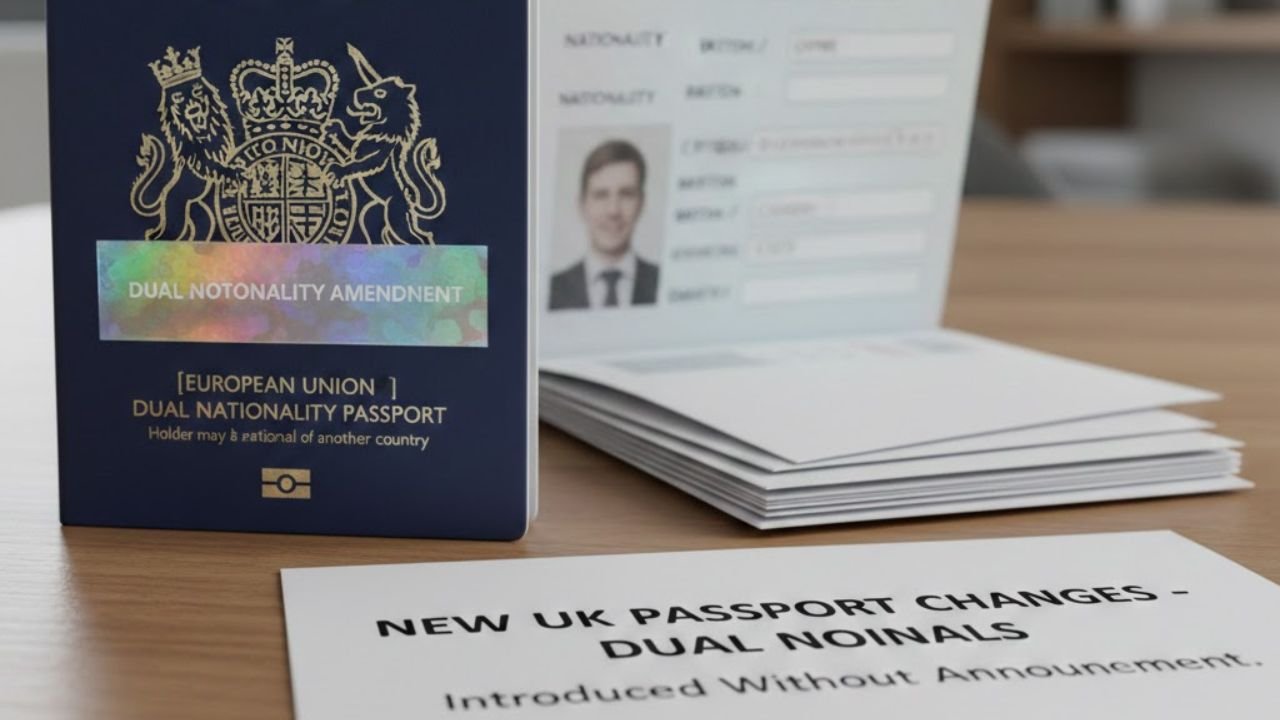
The landscape of British travel has undergone a quiet but seismic shift that is catching thousands of dual citizens off guard. For decades, British nationals holding a second passport from a visa-exempt country—such as the United States, Australia, or an EU member state—often chose to travel to the UK using their non-British documentation. This practice, while never officially encouraged, was a common convenience. However, as of February 25, 2026, the Home Office has effectively closed this loophole. The introduction of strict Electronic Travel Authorisation (ETA) enforcement means that “invisible” British status is no longer a viable way to pass through carrier checks.
The End of the “Non-British Passport” Loophole
The fundamental change lies in the digitisation of the UK border. Under the new ETA regime, all travelers from non-visa countries must have digital permission to board a flight, ferry, or train to the UK. Because British citizens are legally exempt from the ETA scheme, they cannot apply for one. Consequently, if a dual national attempts to check in using only a foreign passport, the airline’s system will search for an ETA that does not exist. This results in an automatic “no-travel” flag. Without a valid British passport or a specific digital alternative to prove their status, dual citizens are now being denied boarding at the gate, despite their legal right to live and work in the UK.
Comparison of Travel Document Requirements
The following table outlines the essential documentation required for dual nationals under the updated 2026 enforcement rules:
| Document Type | Eligibility | Purpose/Function | Estimated Cost |
| Valid British Passport | All British Citizens | Primary proof of citizenship and right of abode. | £88.50 – £100+ |
| Irish Passport | British-Irish Dual Nationals | Exempt from ETA; allows entry under Common Travel Area. | Varies (€75+) |
| Certificate of Entitlement | Dual Nationals using foreign passports | A digital/sticker endorsement proving Right of Abode. | Approximately £589 |
| Electronic Travel Auth (ETA) | Non-British/Non-Irish visitors | Digital permission for foreign visitors only. | £16 |
The Hidden Cost of the Certificate of Entitlement
For those who prefer not to carry a British passport, the alternative is a “Certificate of Entitlement” (CoE) to the Right of Abode. However, this has become a point of significant controversy. Unlike the relatively affordable British passport, the CoE carries a hefty price tag of approximately £589. This fee has been labeled by critics as a “citizenship tax.” Furthermore, from February 26, 2026, these certificates have transitioned to a purely digital format. While this move is intended to streamline the process, the high cost and the sudden necessity of the document have left many families—particularly those with children born abroad—facing unexpected financial burdens just to return home.
Impact on Families and Naturalised Citizens
The group most impacted by these unannounced changes includes naturalised citizens who never bothered to apply for a British passport after receiving their citizenship. Many EU nationals who settled in the UK and gained citizenship post-Brexit continued to use their original national passports for travel. Under the 2026 rules, these individuals are now “digitally stranded” if they are currently abroad without a UK passport. Families with children are also feeling the pinch; a child born overseas to a British parent is often automatically British but may only possess a foreign passport. Without immediate action to secure UK documentation, these families risk being separated at the airport.
Temporary Concessions and Carrier Discretion
In response to the initial chaos at international hubs, the Home Office has issued a minor, temporary concession. Carriers have been told they may exercise discretion if a passenger presents an expired British passport issued in 1989 or later, alongside a valid foreign passport. However, this is not a guaranteed right. Airlines are legally liable for fines if they transport passengers without proper “clearance,” leading many carriers to take a zero-tolerance approach. Travelers are strongly advised not to rely on expired documents, as the discretion lies entirely with the airline staff at the check-in desk, not with the passenger.
Navigating the New Digital Border
The transition to a “contactless” and digital border is part of a broader global trend, mirroring systems like the US ESTA and the Australian ETA. For the UK, this means every individual must be accounted for in a digital database before they even reach the gate. For dual nationals, the era of choosing which “hat” to wear at the border is over. To ensure a smooth journey, the Home Office now expects all British citizens to maintain an active British passport. The shift marks a move away from human discretion at the border toward a hard-coded, digital validation of status that leaves little room for error or tradition.
What You Should Do Before Your Next Trip
If you hold dual nationality, the most important step is to audit your travel documents immediately. Waiting until the week of travel to renew a British passport or apply for a Certificate of Entitlement could result in missed flights and significant financial loss, as processing times are expected to surge. If you are currently outside the UK and find yourself without a valid British passport, you may need to contact the nearest British consulate for an Emergency Travel Document. However, these are typically issued for single journeys only and are not a long-term solution to the new “No Permission, No Travel” enforcement policy.
FAQs
Q1 Can I still travel to the UK with just my US or Australian passport if I am British?
No. As of February 25, 2026, airlines will deny boarding to dual nationals who only present a foreign passport, as they will lack the required Electronic Travel Authorisation (ETA) which British citizens are ineligible to receive.
Q2 How much does it cost to get a Certificate of Entitlement?
The current fee for a Certificate of Entitlement to the Right of Abode is approximately £589. It is significantly more expensive than a standard British passport renewal, which costs around £88.50.
Q3 Does this change affect my legal right to live in the UK?
No. Your legal status and “Right of Abode” remain unchanged. The new rules only affect the documentation you must present to prove that status to airlines and border officials before you travel.