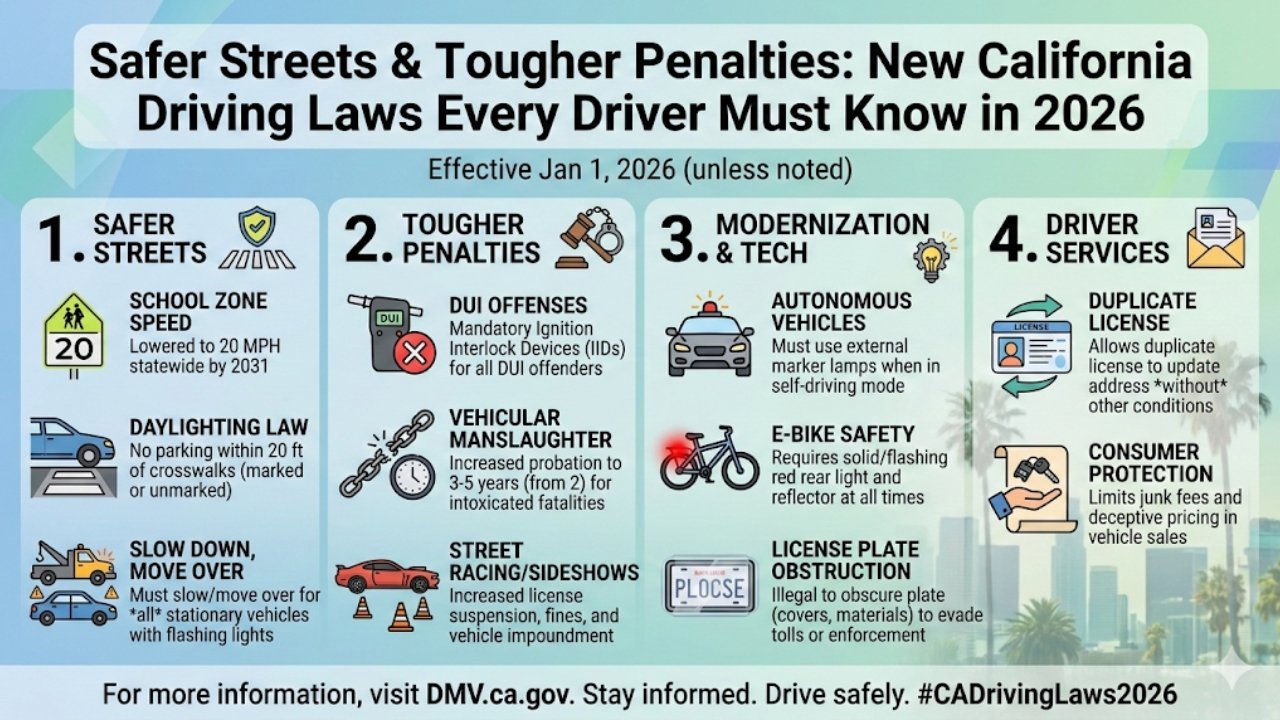
California’s 2026 driving laws introduce bold steps toward safer roads and stricter accountability for reckless behavior. Drivers now face expanded safety protocols and heavier consequences designed to cut down on accidents and protect everyone on the highways. These changes build on years of data showing high risks from impaired driving and roadside hazards.
Expanded Move-Over Rules
The “slow down and move over” law, updated by AB 390, now covers any stationary vehicle with hazard lights, cones, or flares, not just emergency or maintenance trucks. This means when you spot a broken-down car or roadside worker with warnings flashing, shift lanes if safe or drop your speed significantly. Violators face fines starting at $50, but the real goal is preventing those tragic close calls that claim lives yearly.
Highway workers and stranded motorists cheer this expansion, as it addresses the growing number of incidents where passing vehicles clip shoulders. California reports thousands of such crashes annually, and this rule aims to slash them by making caution mandatory across more scenarios. Everyday drivers must stay vigilant, especially on busy freeways where space feels tight.
Tougher DUI Enforcement
AB 366 extends mandatory ignition interlock devices to all DUI offenders, including first-timers, through 2033. These breathalyzer-equipped starters prevent engines from turning over if alcohol is detected, forcing sobriety before anyone hits the gas. Courts can now tie restricted licenses to IID compliance, closing old loopholes that let offenders drive freely too soon.
Probation periods for vehicular manslaughter while intoxicated have jumped from two years to three to five years under new rules. This hits hard for those whose DUIs cause harm, adding jail risks for violations and longer license curbs. The shift reflects California’s push to treat impaired driving as a persistent threat, not a one-off mistake.
School Zone Protections
Local governments can now drop school zone speeds to 20 mph from 25 mph until 2031, when it becomes standard with proper signs. Kids crossing streets deserve this buffer, as studies link even small speed drops to fewer pedestrian injuries. Drivers near schools must obey flashing beacons and watch for pint-sized pedestrians darting out.
| New Law Aspect | Key Change | Penalty/Impact |
|---|---|---|
| Move-Over (AB 390) | Applies to all hazard-lit vehicles | $50+ fine |
| IID for DUI (AB 366) | Mandatory for all offenders to 2033 | Restricted license required |
| DUI Manslaughter Probation | 3-5 years vs. prior 2 years | Jail for violations |
| School Zones (AB 382) | 20 mph option until 2031 standard | Higher fines in zones |
| License Plate Covers (AB 1085) | Bans obstructing tech/products | $1,000 per violation |
| Highway Speed Cameras (AB 289) | Caltrans pilot for enforcement | Mailed tickets |
Automated Enforcement Tools
Speed cameras roll out in highway work zones via AB 289, snapping violators for mailed citations. Red-light and speed cams expand too, using radar to catch speeders without officer chases. These tech upgrades promise fairer policing, targeting hot spots where human patrols fall short.
License plate obstructions get hammered by AB 1085, with $1,000 fines for tints or covers dodging cameras or tolls. No more hiding from automated eyes—clear plates keep traffic flowing and enforcement honest. This pairs with notices for autonomous vehicle companies when their tech breaks rules, blending old and new road realities.
Why These Laws Matter Now
Rising crash stats from DUIs, roadside incidents, and school-area speeding drove these reforms, with California eyeing fewer fatalities in 2026. Tougher penalties deter repeat risks, while safety tweaks like move-over expansions save lives without overcomplicating drives. Compliance keeps points off records and insurance steady.
Authorities like CHP and DMV stress education over punishment at first, issuing warnings for some new speed drops. But ignore them, and wallets feel the hit alongside safer streets for all. These rules reshape habits, urging proactive caution over reactive fixes.
Quick Tips for Compliance
Scan ahead for hazards, install IIDs if ordered promptly, and ease off in school zones. Update apps for camera locations and double-check plate visibility. Safe driving starts with knowing the rules—2026 demands it more than ever.
FAQs
Q: Does the move-over law apply to city streets?
A: Primarily highways, but check for hazards anywhere safe to maneuver.
Q: Can first-time DUI drivers get a license back quickly?
A: Only with IID installation and court approval.
Q: When do school zones hit 20 mph everywhere?
A: Automatic by 2031 with signs.