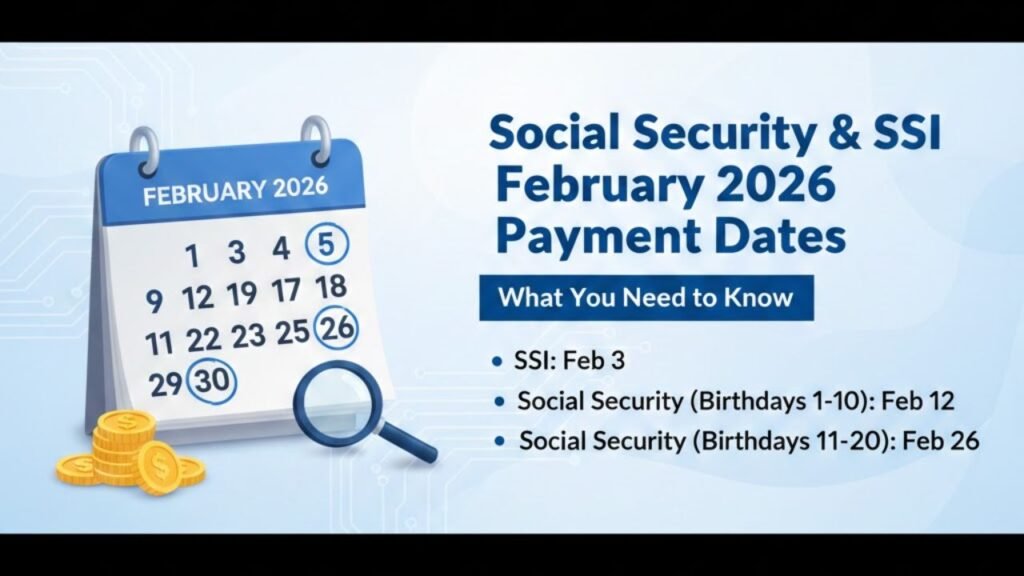
Navigating the federal payment calendar can often feel like solving a complex puzzle, especially when weekends and holidays shift the dates you rely on. For millions of retirees, survivors, and disability beneficiaries, knowing exactly when a deposit hits the bank is the cornerstone of effective monthly budgeting. February 2026 presents a unique schedule due to the way the calendar falls, combined with the ongoing impact of the latest cost-of-living adjustments (COLA) that took effect at the start of the year.
The Social Security Administration (SSA) utilizes a tiered system to distribute funds, ensuring that the banking system isn’t overwhelmed by 70 million payments on a single day. While the schedule follows a predictable pattern based on birth dates and the date you first filed for benefits, minor shifts occur every month. This guide breaks down the specific windows for February 2026 to help you track your funds with precision and confidence.
The Impact of the 2026 COLA Increase
Before diving into the specific dates, it is important to note that your February checks reflect the 2026 cost-of-living adjustment. For this year, beneficiaries saw a 2.8% increase in their monthly payments. This adjustment is designed to help fixed incomes keep pace with the rising costs of groceries, utilities, and healthcare. While the percentage might seem modest compared to previous years, it represents a necessary buffer against inflation.
Additionally, for those enrolled in Medicare Part B, the standard monthly premium has adjusted to $202.90 for 2026. Because these premiums are typically deducted directly from Social Security checks, the “net” amount you see in your bank account might look different than the raw COLA increase would suggest. Understanding these deductions is key to realizing why your final deposit amount might vary slightly from your neighbors’.
Understanding the Payment Groups
The SSA divides recipients into four primary groups. The first group consists of “long-term” beneficiaries—those who began receiving benefits before May 1997—and those who receive both Social Security and Supplemental Security Income (SSI). This group almost always receives their payments on the third of the month. For February 2026, since the 3rd falls on a Tuesday, there is no holiday conflict, and payments will proceed as scheduled.
The remaining three groups are determined by the day of the month on which you were born. These payments are distributed on the second, third, and fourth Wednesdays of the month. If you receive benefits as a survivor or spouse based on someone else’s work record, your payment date is determined by the primary worker’s birthday rather than your own.
The SSI “Double Payment” Month
One of the most common points of confusion in the Social Security world involves Supplemental Security Income (SSI). In February 2026, SSI recipients may notice something unusual: they receive a payment at the very end of the month. This is not a “bonus” check or a double benefit. Because March 1, 2026, falls on a Sunday, the SSA is required by law to send the March payment on the nearest preceding business day.
Consequently, SSI recipients received their “February” payment on Friday, January 30, and will receive their “March” payment on Friday, February 27. This calendar quirk means that while no SSI checks will technically be issued during the month of March, beneficiaries still receive the correct total for the year. Managing your budget during these “glitch” months is vital, as the gap between the February 27 payment and the April 1 payment will be longer than usual.
Birthday-Based Payment Windows
For the majority of retirees and SSDI recipients who filed after May 1997, the Wednesday cycle remains the gold standard. On February 11, those born between the 1st and the 10th will see their funds. Following that, on February 18, the window opens for those born between the 11th and the 20th. Finally, the month concludes with the February 25 payment for those born on the 21st through the 31st.
Even though President’s Day falls on Monday, February 16, it does not typically disrupt the Wednesday payment cycle. However, because it is a federal holiday, banks and post offices will be closed on that Monday. If you typically receive your benefit via a paper check, you should account for a potential one-day delay in mail delivery due to the holiday weekend. Direct deposit remains the fastest and most secure way to ensure your funds arrive exactly on the scheduled Wednesday.
What to Do If Your Payment Is Delayed
If your payment does not arrive on the expected date, the Social Security Administration advises a “wait and see” period of three mailing days before taking action. Often, delays are not on the part of the SSA but are due to processing times at individual financial institutions. If you use a smaller credit union or a prepaid debit card, posting times can vary by several hours or even a full day.
Once that three-day grace period has passed, your first step should be to contact your bank to see if there is a pending transaction. If the bank has no record of the deposit, you can reach out to the SSA at 1-800-772-1213. Using the “my Social Security” online portal is often the fastest way to verify your payment status and ensure that your direct deposit information hasn’t been compromised or changed without your knowledge.
Summary of Key Takeaways for February
To summarize the month of February 2026, beneficiaries should keep a close eye on the 2.8% COLA increase and how it impacts their bottom line. The month features a standard Wednesday progression for most, but a significant shift for SSI recipients who will technically receive their March funds before February even ends. Staying informed about these dates allows you to plan your rent, mortgage, and utility payments without the stress of wondering when your next deposit will arrive.
Being proactive with your “my Social Security” account can also help you stay ahead of any administrative changes. As the SSA continues to move toward more digital-first services, having your online profile set up is the best way to receive instant notifications regarding your benefits. This ensures that you are never caught off guard by calendar shifts or policy updates that affect your financial future.
FAQs
Q1 Why did I get an SSI payment at the end of February?
This is actually your March benefit. Since March 1, 2026, falls on a Sunday, the SSA issues the payment early on the preceding Friday, February 27, to ensure you have access to funds on time.
Q2 Is the 2026 COLA increase included in these February checks?
Yes, the 2.8% COLA increase officially began with payments sent in January 2026. Your February check will continue to reflect this higher amount, minus any Medicare Part B premium deductions.
Q3 What should I do if my payment date falls on President’s Day?
None of the 2026 Social Security payment dates fall on President’s Day (Feb 16). However, because the holiday is a Monday, it may slightly delay the processing of paper checks or bank transfers for the Wednesday, February 18, group.