The Lincoln Wheat Penny, minted from 1909 to 1958, remains the cornerstone of American coin collecting. As we move through 2026, these copper icons continue to see a surge in demand, driven by their historical significance and the dwindling supply of high-grade specimens. While most wheat pennies found in old jars are worth only a few cents, specific years and mint marks have reached record-breaking valuations. Understanding the nuances of the 2026 market is essential for anyone looking to turn pocket change into a serious investment.
Understanding the 2026 Market Dynamics
The numismatic market in 2026 is characterized by a “flight to quality.” Investors are increasingly looking for tangible assets, and certified Wheat Pennies—especially those graded by PCGS or NGC—are leading the charge. Current trends show that while common “bulk” pennies remain steady at roughly 2 to 5 cents each, coins in “Mint State” (MS) condition are seeing double-digit percentage growth. The cessation of newer penny production in some sectors has also sparked a nostalgic renewal of interest in the “Wheatie,” making it a hot topic for both veteran collectors and newcomers.
Identifying Key Dates and Mint Marks
To determine the value of a Wheat Penny, one must first look at the date and the mint mark located just below it. The absence of a letter indicates it was minted in Philadelphia, while a “D” stands for Denver and an “S” for San Francisco. In 2026, the “S” mint marks from the early 20th century continue to hold the highest premiums due to lower mintage numbers. Dates like 1909, 1914, and 1931 are immediate red flags for value, as these years saw significantly fewer coins enter circulation compared to the billions produced in the 1940s and 50s.
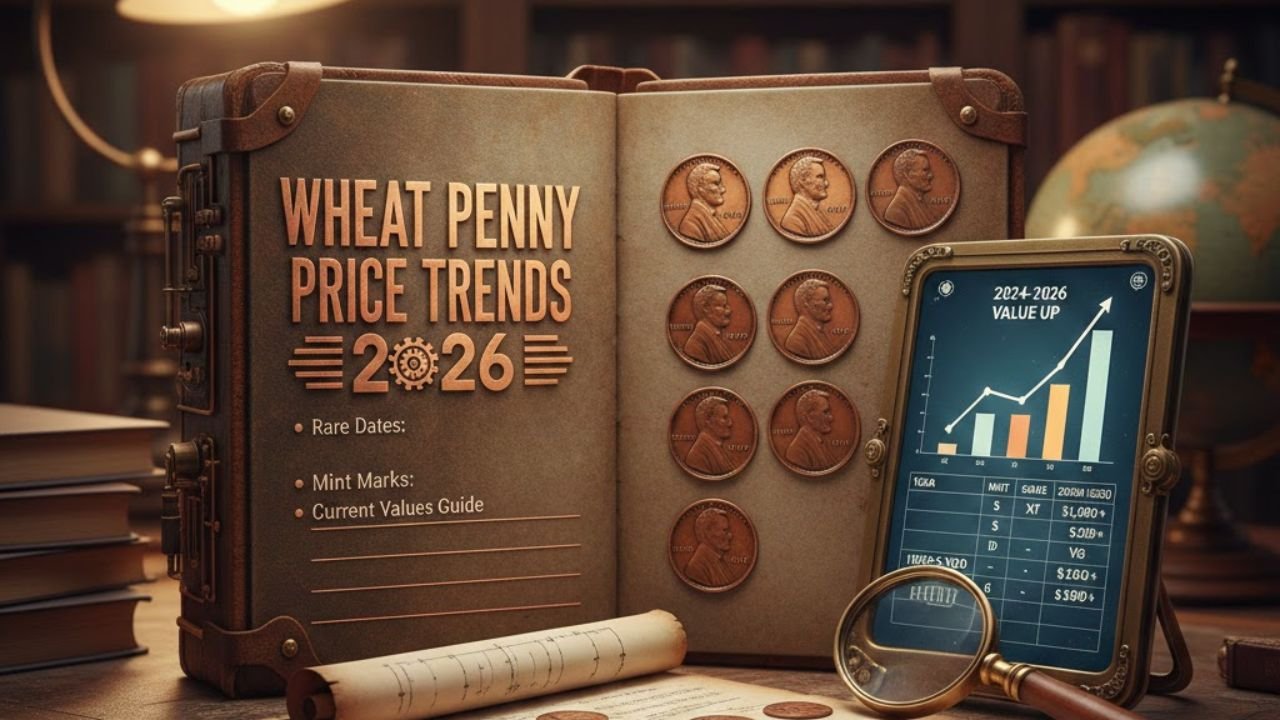
Rare Wheat Penny Value Chart 2026
The following table highlights the estimated market values for the most sought-after Wheat Pennies in the current 2026 landscape.
| Year & Mint Mark | Variety / Feature | Estimated Value (Circulated) | Estimated Value (Uncirculated) |
| 1909-S VDB | Designer Initials on Reverse | $850 – $1,200 | $2,500 – $12,000+ |
| 1914-D | Scarce Denver Mintage | $180 – $350 | $3,000 – $5,500 |
| 1922 No “D” | Missing Mint Mark Error | $600 – $900 | $5,000 – $25,000 |
| 1931-S | Key Date Low Mintage | $75 – $120 | $200 – $600 |
| 1943 Copper | Struck on Bronze Planchet | $60,000+ | $250,000+ |
| 1944 Steel | Struck on Steel Planchet | $10,000+ | $75,000+ |
| 1955 DDO | Doubled Die Obverse | $1,200 – $2,500 | $5,000 – $30,000 |
The Allure of Wartime Errors
The 1940s produced some of the most legendary errors in coin history due to the metal shortages of World War II. In 1943, pennies were supposed to be made of zinc-coated steel to save copper for the war effort. However, a few copper planchets left over from 1942 remained in the hoppers. These “1943 Copper Pennies” are the holy grail of the series. Conversely, in 1944, when the mint switched back to copper, a few steel planchets were accidentally used. In 2026, these wartime mistakes are not just coins; they are high-stakes auction items that can fetch six-figure sums.
The Role of Doubled Die Varieties
Errors aren’t limited to the wrong metal. The “Doubled Die” variety occurs when the die used to strike the coin has a misaligned image, resulting in a blurred or “doubled” appearance of the letters and dates. The most famous is the 1955 Doubled Die Obverse, where the words “IN GOD WE TRUST” and “LIBERTY” look as if they were printed twice. In 2026, even mid-grade versions of this coin are highly liquid, meaning they sell very quickly at coin shows and online auctions because their rarity is paired with high visual recognition.
Condition and Grading Importance
A common mistake among new collectors is overestimating the value of a damaged coin. In the 2026 market, “eye appeal” is everything. A 1909-S VDB that is scratched, cleaned, or corroded will sell for a fraction of the price of a “problem-free” specimen. Professional grading services use a scale from 1 to 70. A coin graded MS65 (Gem Uncirculated) can be worth ten times more than the same date in MS60. If you find a rare date, the best move is to keep it in a protective flip and avoid touching the surface with your fingers.
Future Outlook for Collectors
As we look toward the end of 2026 and into 2027, the Wheat Penny remains a robust investment. Unlike modern coins which are minted in the billions, the supply of 100-year-old pennies is fixed and shrinking as coins are lost or tucked away in long-term private collections. For those starting today, focusing on “semi-key” dates like the 1909-S or the 1911-S can provide a balance of affordability and potential appreciation. The history of the Lincoln Cent is the history of America, and its value only seems to ripen with age.
FAQs
Q1 How can I tell if my 1943 penny is the rare copper version?
The simplest test is using a magnet. If the penny sticks to the magnet, it is the common steel version. If it does not stick, it might be copper and should be weighed and authenticated by a professional.
Q2 Are 1950s Wheat Pennies worth anything?
Most pennies from the 1950s are very common and worth about 2 to 5 cents in circulated condition. However, high-grade uncirculated versions or specific errors like the 1955 Doubled Die are worth significantly more.
Q3 Where is the best place to sell rare Wheat Pennies in 2026?
For high-value coins, reputable auction houses or certified coin dealers are best. For common dates, local coin shops or online marketplaces like eBay are popular, provided you have clear photos and accurate descriptions.